The wartime refuge of Norway’s royals
- November 12, 2026
- Peter Caddick-Adams
- Themes: England, History, Scandinavia
The late King Harald V understood his family’s debt to the Green Howards, the Yorkshire regiment that guarded them in 1940.
On 28 August, Norway’s popular monarch, Harald V, a kinsman of Britain’s Charles III, passed away. With close connections to the Swedish, Belgian, Danish and British royal families, his ramrod-straight back, perfect command of English and 6-foot-2-inch-frame conveyed the very image of kingship. I had the pleasure of meeting him at a British Army function where he was introduced to me as the Colonel-in-Chief of the Green Howards, a distinguished Yorkshire regiment dating back to 1688, and so named after being led by a Colonel Charles Howard during the War of the Austrian Succession.
Immediately, the Norwegian king asked my Christian name, embarked on some military anecdotes, seemed genuinely interested in what I had to say, and left me with the impression of a modest and humble man, rather like a favourite uncle. I could well understand why his approval ratings hovered in the 70s for most of his 1991-2026 reign. The reason for his British colonelcy was that the warriors from Yorkshire had guarded his royal forebears when they were forced into exile by the Wehrmacht in 1940.
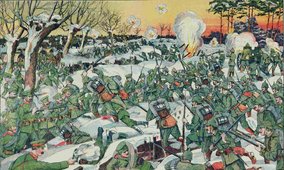
Norway’s own darkest hour began on 9 April 1940 when the first German troops arrived, aiming to secure ice-free harbours from which to control the North Atlantic, secure the trade routes used to transport iron ore from Sweden and pre-empt any Anglo-French invasion with the same aim in mind. As it happened, the Allies were planning to mine Norwegian waters just in case of German action. The two naval forces, both ignoring Norwegian neutrality, arrived off the Scandinavian coast at the same moment, leading to several naval clashes that cost the Kriegsmarine dearly.
Relying on Norway’s neutral status, the Norwegian army was ill-prepared for the ferocity of General Nikolaus von Falkenhorst’s assault, though it managed to sink the heavy cruiser Blücher in Oslofjord on the first day. As German paratroopers and mountain soldiers began capturing key ports and coastal cities, the defenders withdrew into the country’s rugged interior.
To most, the invasion had come as a surprise. Norway had stayed out of the First World War, and most assumed it would ride out the Second as well. In consequence, barely 1,000 were killed or wounded during Operation Weserübung, the only truly tri-service undertaking of the Third Reich. British forces lost nearly 2,000 killed, wounded or captured, the French and Poles (under French command) around 500.
The overall German casualty bill was in excess of 5,000, and, almost immediately, resistance movements sprang up across the country. Thousands became involved with various forms of underground activities such as writing and distributing pro-Allied newspapers, smuggling people to and from Sweden or the United Kingdom, and sabotage of ships, rail tracks and factories. They were supported by the Shetland Bus of small fishing vessels, which ferried weapons, supplies and intelligence personnel between Scotland and occupied Norway under the cover of darkness.
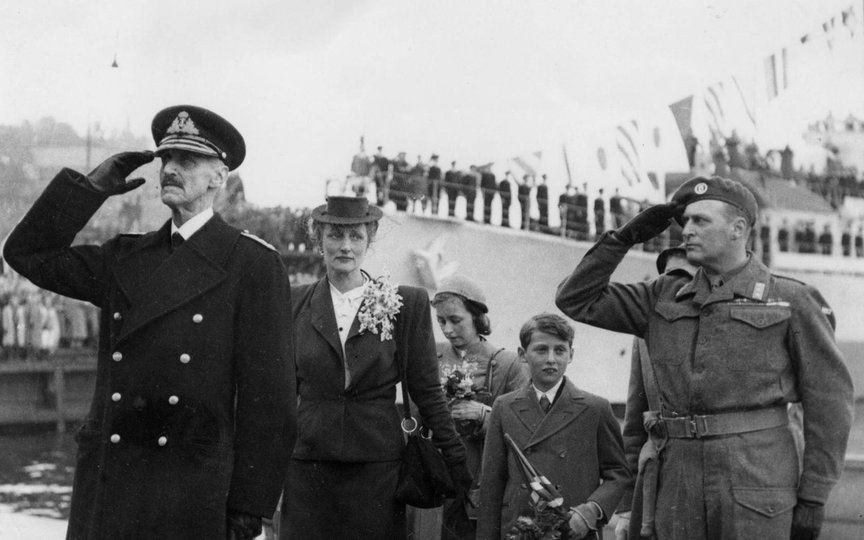
Harald related how his grandfather, the equally popular King Haakon VII, was forced to leave Norway on 7 June with all his family and other members of the Norwegian government, while the country came under attack from the Luftwaffe. They fled to the United Kingdom by boat, and, three days later, on 10 June 1940, the German campaign in Norway was complete. The Nazi occupation was deadly, with harsh reprisals, overseen by the fascist traitor Vidkun Quisling and his Nasjonal Samling (National Gathering). Around 50,000 who had sympathised and collaborated with the Nazis were found guilty of treason after the war, of whom 25 were shot. Ever since, the word ‘quisling’ has been a synonym for a traitor.
Though a youngster, Harald himself was touched by the war, spending his early years in the United States, as far away from the Nazi grip as possible, and since 1942, he told me, successive Norwegian monarchs have always been Colonels-in-Chief of the Howards. It was fitting that an honour guard from their successors, the Royal Yorkshire Regiment, was present at Harald’s state funeral on 9 September. Harald V was regarded as one of Norway’s greatest leaders, surpassed only by Haakon VII. Reflecting genuine regard and respect, King Harald’s coffin, draped in the royal standard, lay in state at the chapel of the Royal Palace for eight days and was visited by 46,000 people, before it was brought on a gun carriage through hushed streets to Oslo Cathedral.
As 21-gun salutes were fired across the land, mounted police led the cortege, escorted by the great and the good of Norway, the crowned heads of Europe, and heads of state and diplomatic representatives. In total, nearly 100 countries were represented. In his sermon, the Most Reverend Dr Olav Fykse Tveit, Church of Norway’s presiding bishop, observed that the love between the people and King Harald had not ended with his death. ‘Most things come to an end in this life. Almost everything. But not love. Life and love are the greatest gifts God has given us. And the greatest of these is love, stronger even than death itself.’