All of Jan van Eyck’s surviving portraits have been brought together for the first time at the National Gallery. The result? A first-rate gathering of firsts.
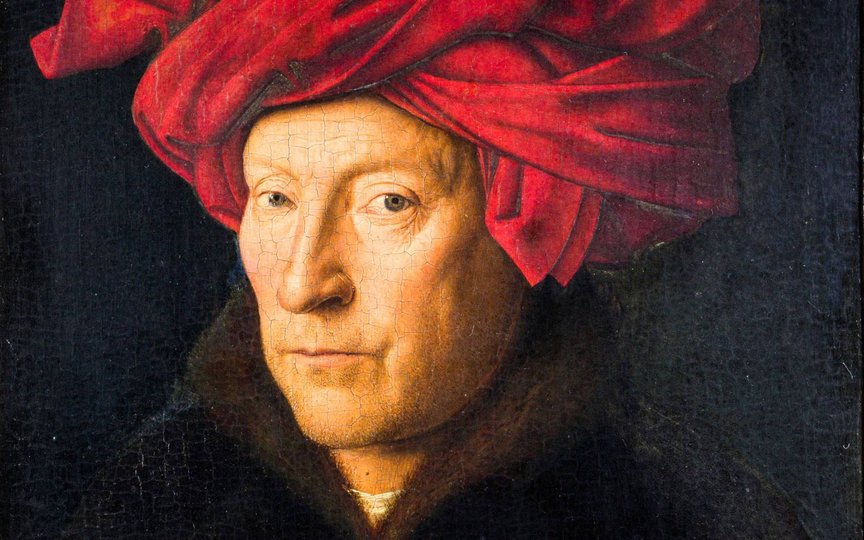
Jan van Eyck makes Vermeer look prolific, given what survives of his work. There are just nine surviving painted portraits of his, all of which have been gathered for the first time at London’s National Gallery, along with his only surviving drawing, and what a triumph this exhibition is, a first-rate gathering of firsts. The opening portrait, the gallery’s own, Portrait of a Man, from 1433, may be a self-portrait; if so, it is the first in western painting by its first great portraitist. The sitter has bloodshot eyes, stubble on his chin, a network of veins, a turban of rich crimson, and is draped in fur – Van Eyck was by then a wealthy man, thanks to the patronage of Philip the Good, Duke of Burgundy, who clearly adored his work and in whose Flemish realms the city of Bruges, Van Eyck’s home, was located.
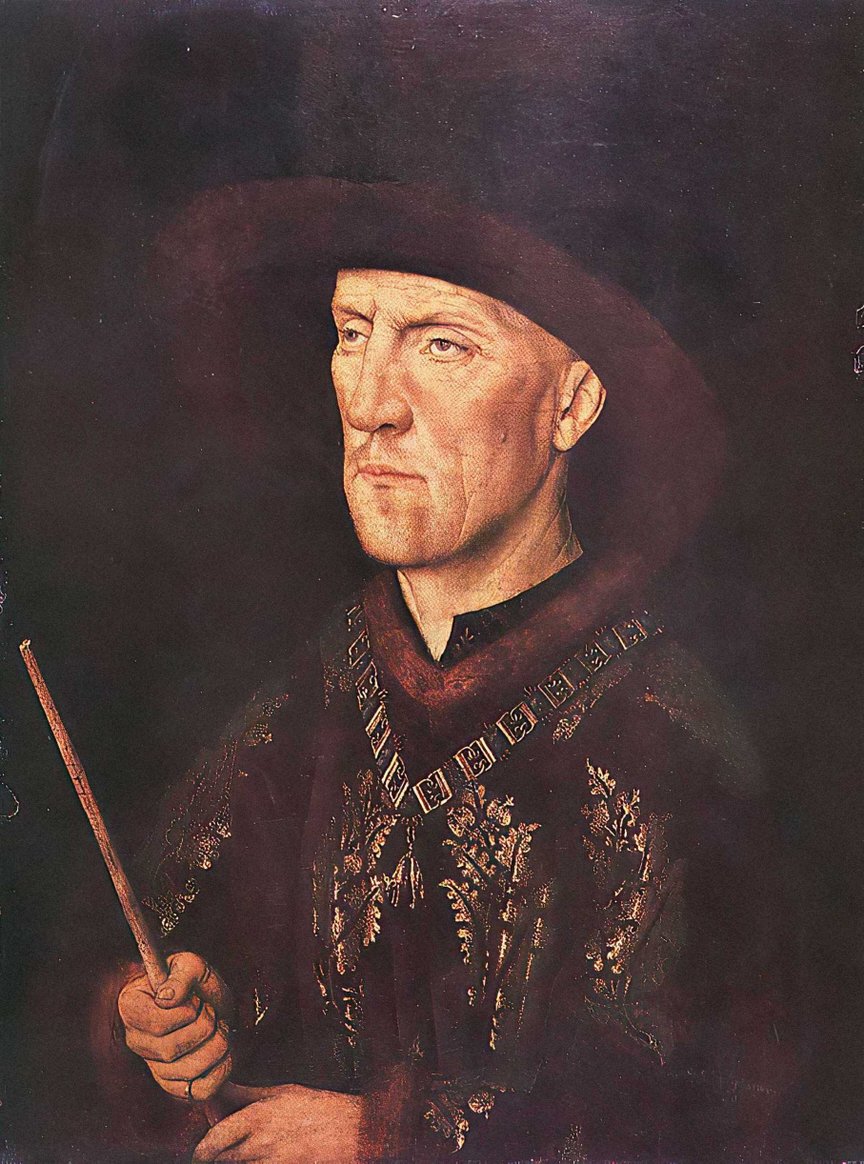
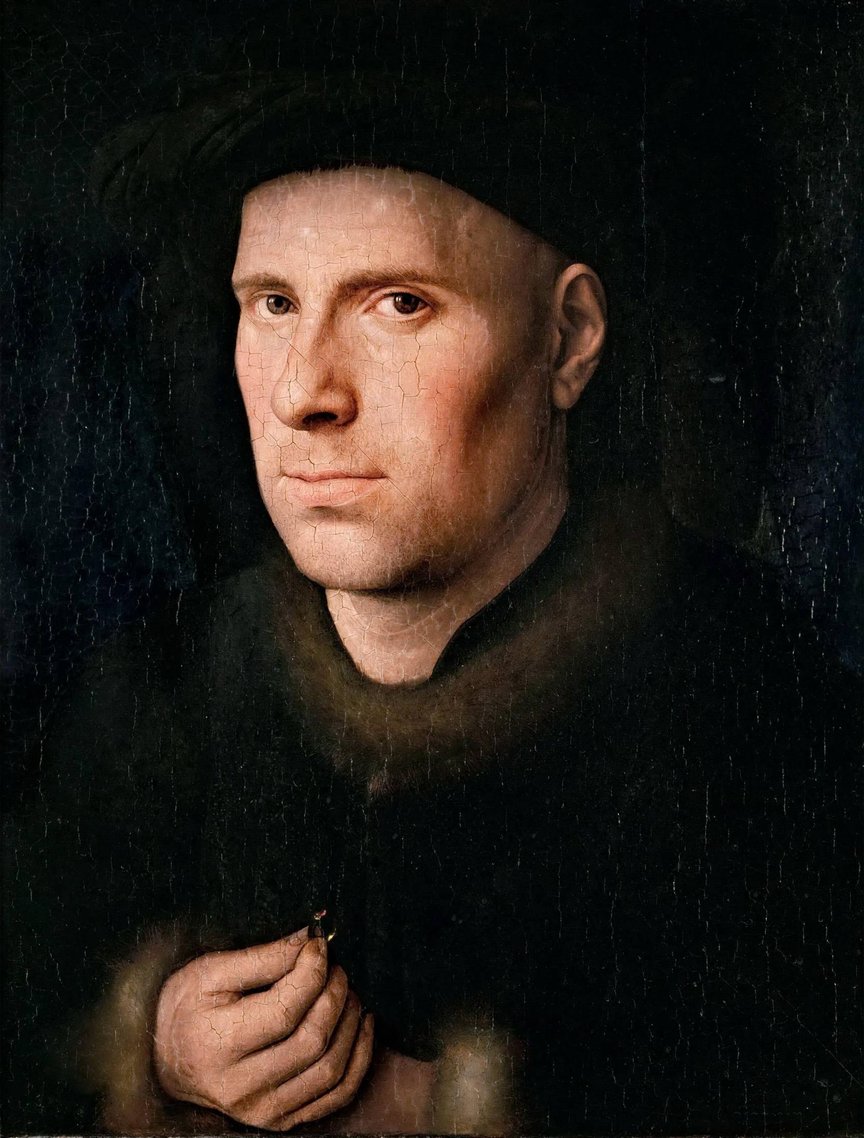
The same unflinching realism that Van Eyck subjects himself to he casts upon others. The hard, weathered face of Philip’s courtier, Baudouin de Lannoy, is in stark contrast to his sumptuous finery, topped by an imposing fur hat. But Van Eyck is among the first to portray lesser souls. The goldsmith and assayer, Jan de Leeuw, presenting a ring, stares with an interrogating gaze, one who sees through counterfeits – Van Eyck uses the term ‘counterfeited’ instead of ‘portrayal’ in the inscription on the painting’s rare original frame, an exemplar of the artist’s love for word play and symbolism – the small image of a lion, painted on the frame as if made of brass, is a pun on Leeuw. The frame mirrors the sitter’s profession, its characters painted as if incised into a metal plaque, in a host of fictive metals; Van Eyck, the realist, embraces illusion, too. Don’t be fooled, he warns. His paintings require sceptical, curious examination, and the spacing of the exhibition, with each small portrait hanging alone, enables the visitor to do just that.
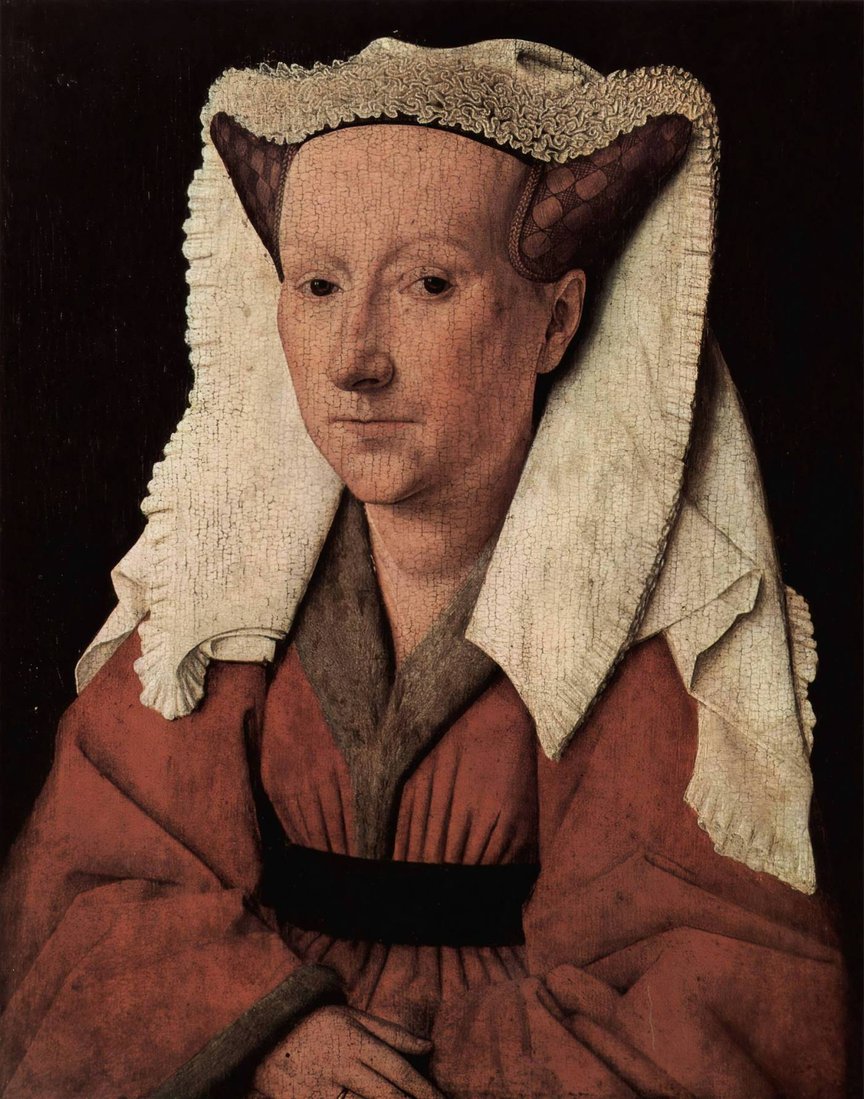
The portrait of Margaret van Eyck, the painter’s wife, imperious, no-nonsense, is a milestone in European painting – the earliest dated portrayal of a woman who was neither royal nor an aristocrat. Its marbled reverse, the only one of the artist’s to survive undamaged, is created with flicks of paint, anticipating the techniques of abstract art, achieving, quite deliberately, the appearance of porphyry. The frame’s Latin inscription – Van Eyck also knew Dutch, French and Greek – identifies his wife as 33 years old and concludes with his Dutch signature motto ‘Als ich can’ – at once a claim of authorship and a boast of Van Eyck’s singular capabilities.
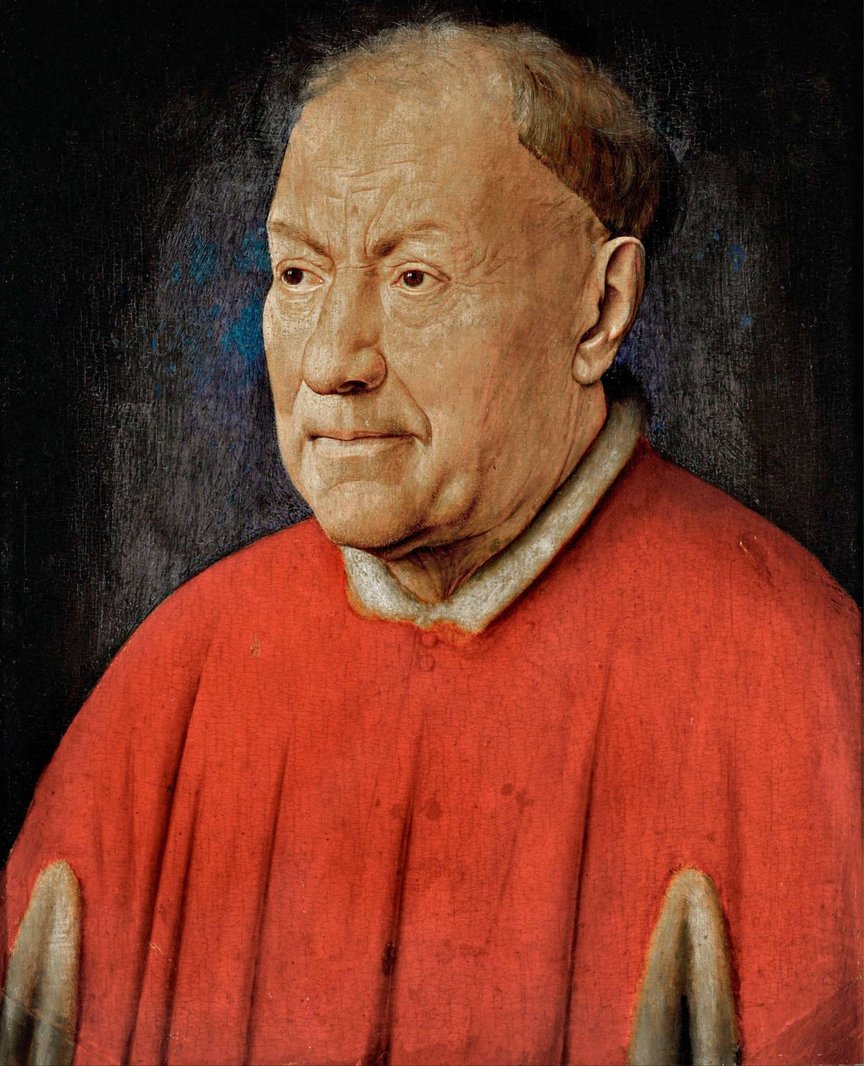
A particular coup is the pairing of the Portrait of an Elderly Man (c.1438), on loan from Vienna, with its preparatory sketch – gold and silverpoint on paper – from Dresden. The latter is extraordinarily subtle and deft in its draughtsmanship, its sculptural effect created by placing stylus strokes closely together. The painting of the same subject, Van Eyck’s largest, was long thought to be of the Bolognese cleric Niccolò Albergati, though details, such as the lack of strict tonsure and his robe’s shade of red, suggest a university scholar.
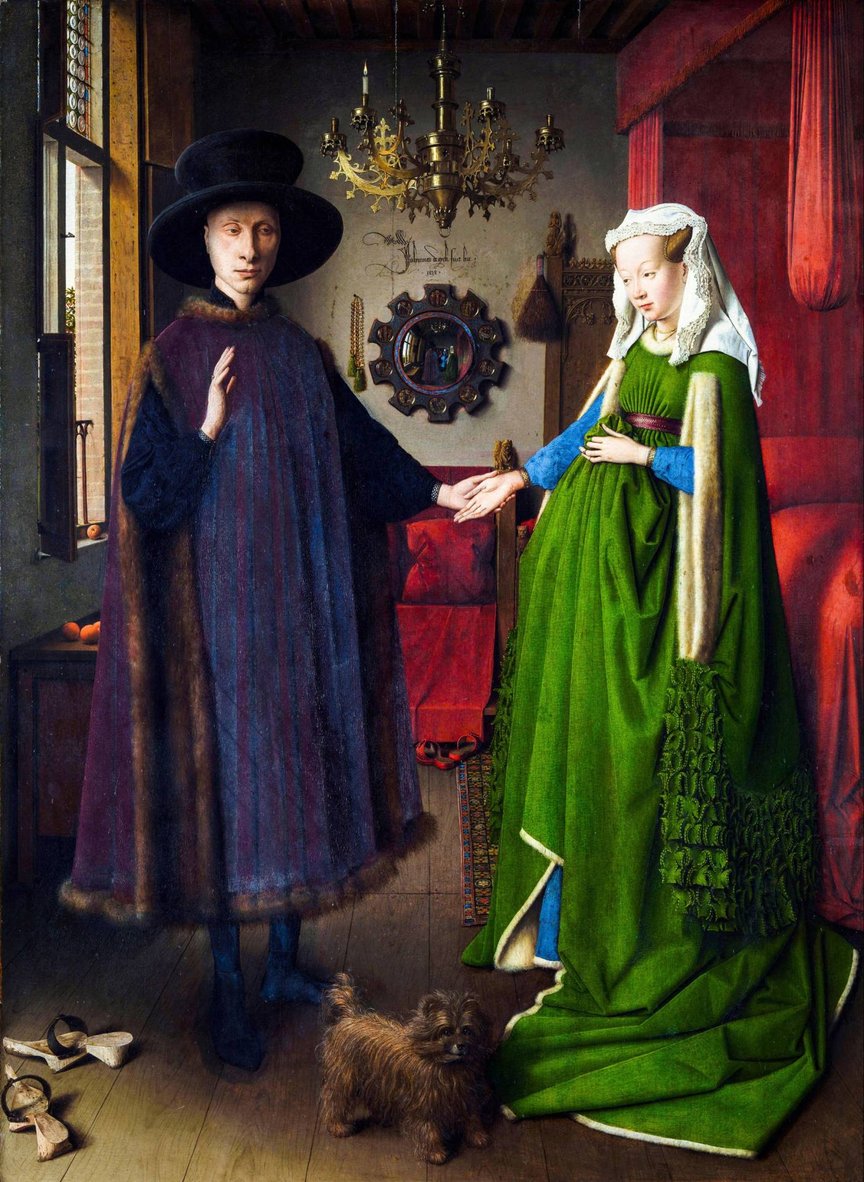
Inevitably, amid the portraits, hangs one of the National Gallery’s treasures, the Arnolfini Portrait of 1434, which probably depicts the Lucchese merchant Giovanni di Nicolao di Arnolfini and his wife. It is a composition of infinite puzzles and mysteries, about which the great art historian Erwin Panofsky, who had long pondered its meanings and mysteries, cited a Renaissance translator almost in despair: ‘This, too high for my wit, I prefer to omit.’ But who are the characters in the mirror? Perhaps one of them is the painter himself; he has already declared ‘Johannes de Eyck fuit hic. 1434’ (‘Jan van Eyck was here. 1434’) on the graffitied wall of the couple’s chamber.
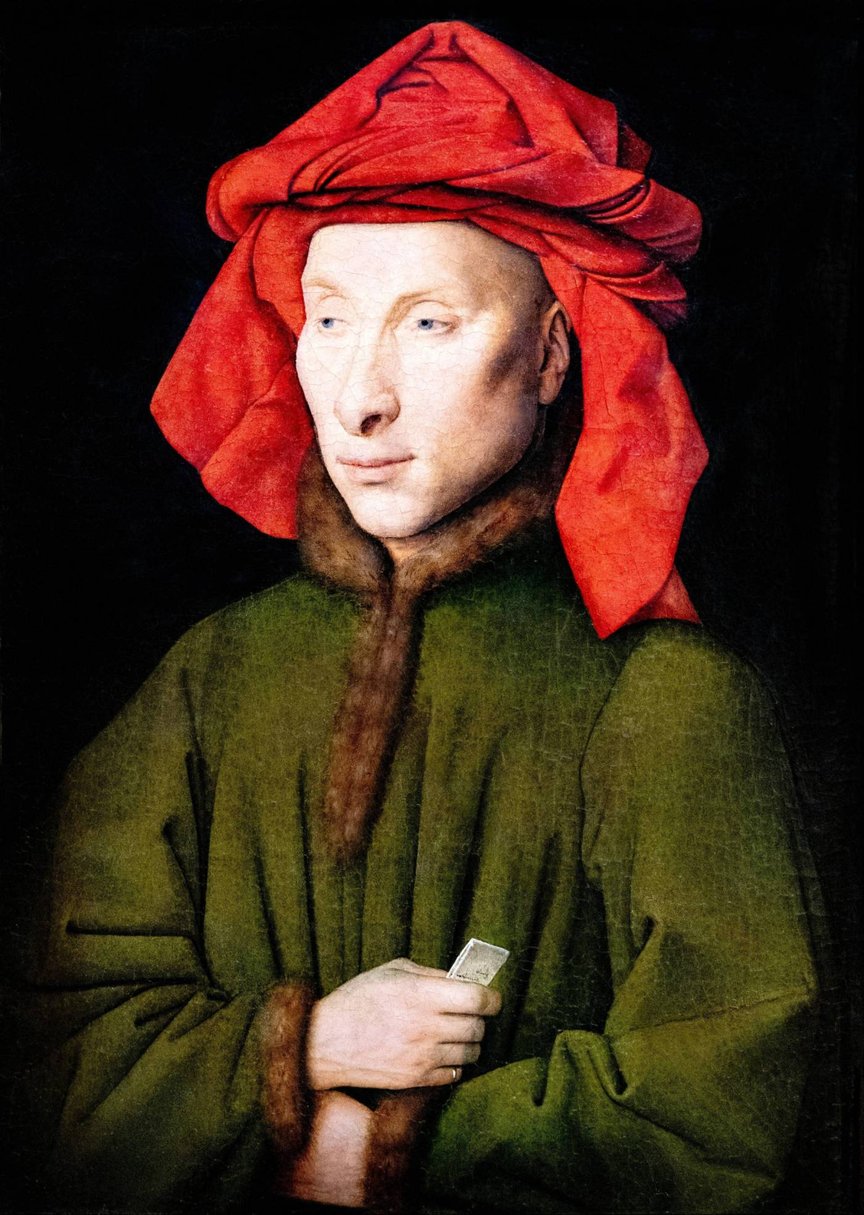
The exhibition pairs wonderfully this most celebrated of paintings with a portrait from Berlin’s State Museums of Giovanni Arnolfini (certainly the same man), painted a few years later. In contrast to the exuberance of the Arnolfini Portrait, here the man is in subdued surroundings, holding an illegible note and a wry smile, clothed in sober green. He is the only known example of a non-royal individual being painted twice during the 15th century, which raises an intriguing question, adding mystery upon mystery: what had he done to deserve such honour?
Van Eyck: The Portraits is a major achievement and its curators, Emma Capron and Nicholas Flory, have created a display in the best tradition of the National Gallery. Which makes the gallery’s recently announced 10-year plan all the more worrying, with its risible ambitions to be ‘home to the story of painting’ (impossible anyway) and become ‘the most engaging gallery in the world’ (it’s long had a claim to that title because of the quality of its scholarship). Please, do not follow other major London galleries such as Tate (ugh) in a banal quest for ‘relevance’. Just keep on creating exhibitions like Van Eyck: The Portraits, born of profound scholarship and love of the subject – the exhibition of the year.
Van Eyck: The Portraits runs at the National Gallery, London, from 21 November 2026 to 11 April 2027.


