The invention of equality
- October 26, 2026
- David Wootton
- Themes: Philosophy, Politics, Religion
Teresa Bejan’s history of equality before egalitarianism locates the origins of a modern conviction in the England of the 1640s. It is an exceptional work that marks a new beginning.
First Among Equals: Visions of Equality Before Egalitarianism, Teresa M Bejan, Belknap Harvard, £29.95
The principle of equality is the foundational principle of modern normative political theorising. Everyone is familiar with the Declaration of Independence: ‘We hold these truths to be self-evident, that all men are created equal, that they are endowed by their Creator with certain unalienable Rights, that among these are Life, Liberty and the pursuit of Happiness.’ Here, equality underpins the claim that we all, individually and collectively, have unalienable rights and that governments are established to protect those rights. But in what sense are we created equal? If we take God out of the picture does an argument for equality still hold? And if equality as a foundational principle is really ‘self-evident’, why is it only in comparatively modern times that it has come to seem so?
Teresa Bejan has answers to these questions, and they are novel and provocative. She has fundamentally re-conceptualised the history of equality; for an historian of political theory there could hardly be a more important achievement. Her book has a precursor: Quentin Skinner’s Liberty Before Liberalism (1998). Her working title was evidently Equality Before Egalitarianism, but the thrust of her book is in many ways the opposite of Skinner’s. He argued that before the emergence of Lockean liberalism liberty had generally not been understood in terms of rights. To be free, before Locke, was not to be subjected to the arbitrary rule of another; the antonym of liberty was thus slavery. This neo-Roman or republican conception of liberty, Skinner maintained, needed to be recovered and had an important role to play in contemporary debates. Bejan, by contrast, may seek to re-animate lost ideas of equality, but she does so in order to emphasise the peculiar modernity of what is still for her an inescapable way of thinking. Thus, she may be understood as seeking what Skinner once called The Foundations of Modern Political Thought (1978), but her story is radically different from Skinner’s, for she presents not a lengthy evolution towards modernity but a single moment of rupture. Moreover, unlike Skinner (at least the Skinner of 1978) she does not take Locke to be the paradigmatic modern political theorist, for, as she stresses, Locke was quick to allow for deference within civil society. For him, egalitarian principles are the rootstock, but hierarchical practices are the scion. Her question is thus not how did we get to Locke, but where does modern egalitarianism originate?
The standard literature on equality seeks to establish a long tradition: Athenian democracy, stoic philosophy, Roman law and apostolic Christianity are all invoked. Bejan is (rightly) impatient with these arguments. Equality in democratic Athens was the privilege of citizens; no Athenian thought it should imply equal rights for slaves, women or non-citizens. Stoics insisted that we are all equal in that we are all born, nourished and die; but this was never taken to imply that we should have equal rights in society. Roman law maintained that we are all equally subordinate before the authority of the emperor, but that never implied equal treatment for all. And the early Church stressed that we are all brothers and sisters in Christ, obliged to love one another; but at the same time slaves must obey their masters, for we are all descended from Eve. Where scholars have maintained that these supposedly egalitarian traditions simply failed to accept the logic of their own premises, Bejan argues that their acceptance of political, legal, social and economic inequality was perfectly consistent with their premises once those premises are properly understood. Their arguments for equality were never egalitarian; when we imagine they were we misread them.
Egalitarianism, Bejan argues, was invented by John Lilburne, in the summer of 1646, in The Free-Mans Freedome Vindicated, which boldly asserted that ‘every particular and individual man and woman’ (my emphasis) was ‘by nature all equall and alike in power, dignity, authority, and majesty’. If people have authority one over another it can only be ‘by mutuall agreement or consent’. Lilburne did not acknowledge just how radical a break with tradition this new egalitarianism represented, and he justified it by creative misreadings of recognised authorities. But, once such misreadings are set aside, it becomes apparent that it involved what Bachelard called an epistemological break. Its superficial similarity to previous invocations of equality should not mislead us. It is a new beginning.
This basic argument is sound. It has an interesting consequence, which is that Hobbes’ Leviathan has to be read as a post-Lilburne, egalitarian text, while his pre-1646 works have to be read as non-egalitarian. I think one can sustain this argument, though it is a delicate one.
There are some peculiar limitations to Bejan’s presentation of her argument. Her claim is that, from ancient Greece on, two technologies were paradigmatic in discussions of equality: balance scales, which measure equal weights, and coinage, which certifies (at least in principle) equal weights and equal values. No mention, though, of George Thomson or Richard Seaford on the intellectual consequences of coinage. Her account of the origins of egalitarianism ought to lead to an engagement with Richard Ashcraft’s interpretation of Locke as a post-Leveller thinker, but it doesn’t. When it comes to creative misreadings, she cites Harold Bloom (a reference given to her by a colleague, not drawn from her own reading), but not Ginzburg’s The Cheese and the Worms. There’s a cloistered character to the book: at times her footnotes seem based on the reading list for a political theory module such as she might teach herself, rather than on an open-ended intellectual exploration. No mention for example of John Fletcher’s play The Woman’s Prize (c.1609), an egalitarian riposte to Shakespeare’s The Taming of the Shrew.
Bejan is surprisingly keen to accuse egalitarians of inconsistency. She explains wonderfully how the introduction by Quaker merchants of a fixed price for every buyer was revolutionary, but she still wants to convict them of hierarchical thinking, which is, as she is well aware, almost inescapable in real (and in spiritual) life. Thus, she complains that they never condemned slavery with an ‘explicit assertion of equality as a basis on which enslaved people might themselves demand to stand as equals’. But she has just quoted Quakers as saying, in 1688, when arguing against their co-religionists who held slaves, ‘have these negers not as much right to fight for their freedom as you have to keep them slaves?’ which sounds like a clear acknowledgement that slaves might themselves demand to stand as equals.
This leads us to the one point, as far as I can tell, at which Bejan goes seriously astray. She describes Lilburne’s opposition to the kangaroo courts which tried leading royalists in 1649 after the execution of the king (an execution that Lilburne opposed, because the king was tried by no known law and by no established procedure). She implies that Lilburne thought the royalist aristocrats ought to have been tried by their peers, i.e. other members of the House of Lords, which would be odd, as the House of Lords had been abolished with Lilburne’s approval. But that is not at all what he said, indeed he carefully avoided the word ‘peers’. He claimed that the royalist commanders were entitled to be tried by a jury of their neighbours, quoting Coke on the proper composition of a jury. Lilburne had invented the egalitarian argument in 1646 because he had insisted that the House of Lords had no right to try him; only a properly constituted jury of his peers (or equals) could judge him. As for the Lords, they were indeed no better than his peers or equals. Lilburne refused to remove his hat to them as a way of asserting that they had no authority over him. Even as his equals, they could not judge him, for a jury had to be a jury of his next (i.e. immediate) neighbours; no metropolitan court could try him, or, by the same argument, the defeated royalist generals. Here Bejan accuses Lilburne of inconsistency when he is perfectly consistent, and consistently egalitarian.
Way back in December 1979 Mark Kishlansky published an article (not cited here) entitled ‘The Army and the Levellers’ in which he argued that the Levellers were much less important at Putney than had previously been assumed. A few months later a meeting of contributors to the Cambridge History of Political Thought 1450-1700 (a volume which finally appeared in 1991) was called. Peter Burke spoke up: why on earth was a whole chapter being devoted to the Levellers when Kishlansky had demonstrated they were of no importance? As the contracted author of that chapter, I was naturally somewhat dismayed. Now, thanks to Bejan, the Levellers are vindicated. Kishlansky may have been right about Putney, but it is Lilburne who first insisted that equality is the only self-evident foundation for political, economic and social legitimacy.
Bejan does not find Lilburne’s arguments philosophically convincing. Equality, on her account, is an example of what has been labelled the Tinkerbell Effect: it is a foundational principle only because we have come to believe it is a foundational principle. It only becomes a self-evident foundation when the arguments for it (which are necessarily based on non-sequiturs) are grounded in egalitarian practice. To understand Lilburne, then, we need to look not so much at the texts he (mis)read as at the social practices within which strong equality came to seem plausible, even self-evident. Words matter less than deeds. The Free-Mans Freedome Vindicated is an important text, but it is merely a postscript to a decisive action: Lilburne’s refusal to doff his hat.
Her claim then is that theorising equality is less important than practising it. Others will surely argue that she underestimates the case for equality. Rousseau never gets a mention, but there is a good argument to be made that the apparent benefits of inequality for the rich and powerful are illusory, and that, given the choice, most people would, or at least should, prefer equality to inequality.
‘There is a saying’, said the Germantown Quakers in 1688, ‘that we shall doe to all men like as we will be done ourselves; making no difference of what generation, descent or colour they are.’ This, though based on Matthew 7:12, is (arguably) very different from the more common biblical injunction to love your neighbour as yourself (Leviticus 19:18; Mark 12:31; Matthew 22:39; Romans 13:9; James 2:8), and if we are looking for the origins of egalitarianism we might usefully study changing interpretations of the parable of the Good Samaritan, which only acquired its modern interpretation – that it is an exemplification of this universal Golden Rule – in the late 17th century, under the influence, we may now say, of the new egalitarianism.
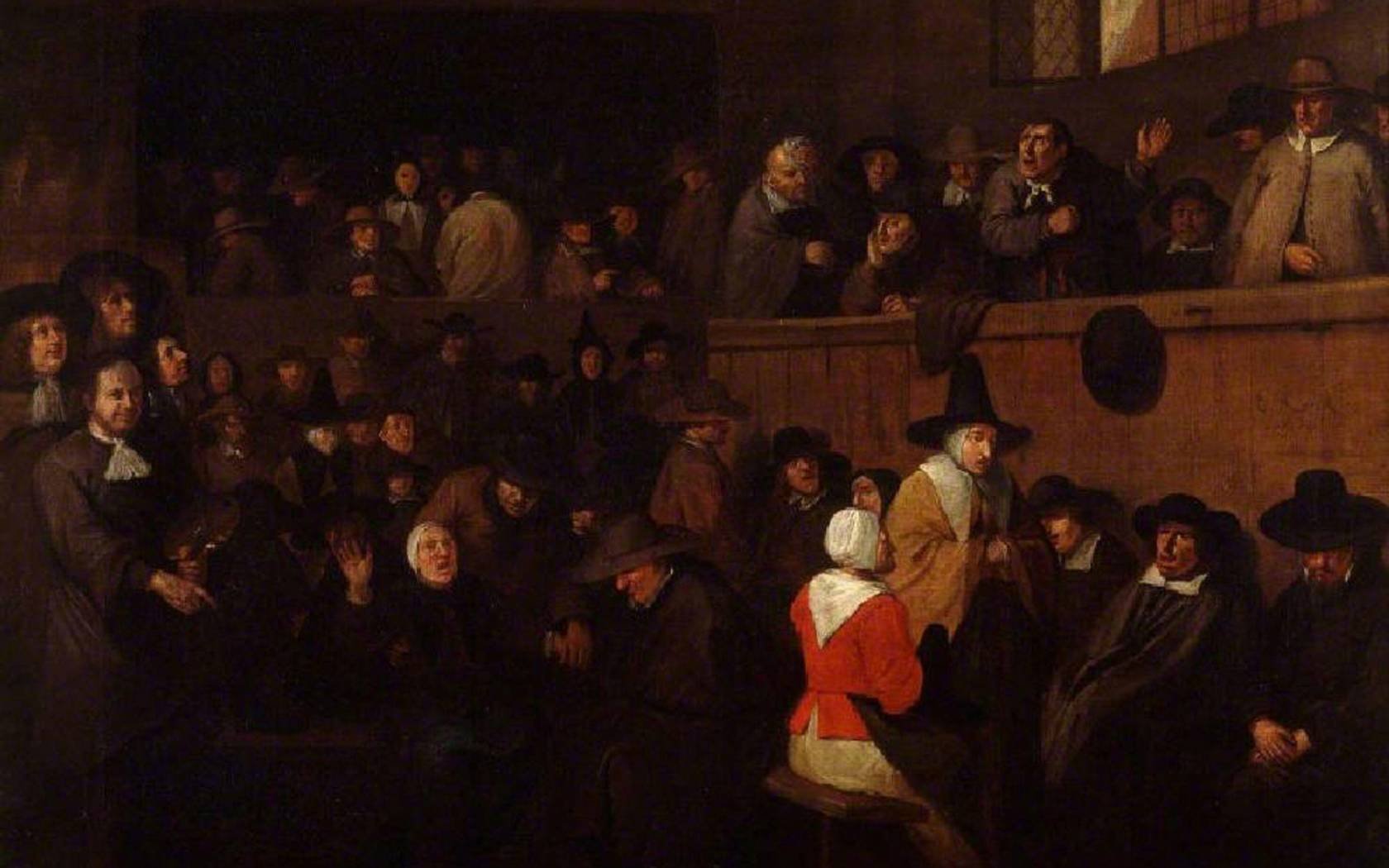
In 1599 Edward Topsell invoked the egalitarian ‘do unto others’ principle as one that should be obeyed instead of the Golden Rule, that being Aristotle’s principle of distributive justice; it first becomes the Golden Rule in a 1604 pamphlet on taxation entitled The Order of Equalitie Contrived and Divulged: a striking case of egalitarianism before 1646. One of the first theologians to invoke it under that name was the Puritan William Perkins (d.1602) in a posthumous sermon of 1606. He described it as ‘the law of nature, being the summe of the Law and the Prophets, by Christs own testimonie’. Bejan argues that the emphasis on equality in the New Testament derives from Roman law; but one might also argue, in the manner of Borges, that it reflects the bitter religious struggles which led up to the English Civil War, that it is, indeed, yet another creative misreading. She briefly acknowledges that Lilburne’s egalitarianism was grounded in the practice of the sects, but never explores, for example, the refusal of Puritan men to remove their hats in church, at least during the sermon and lessons, in contravention of the 18th canon of the Church of England. (On hats, see Bernard Capp’s article in The Historical Journal (2026), 1-19.)
This, though, would be to extend Bejan’s argument in a very different direction. One rarely finishes a book wishing it had been longer, but this is an altogether exceptional work, one which marks a new beginning.


