The Christian genesis of North Korea’s personality cult
- October 19, 2026
- Jonathan Cheng
- Themes: Asia, History, North Korea, Religion
North Korea’s first Great Leader, Kim Il Sung, owed as much to the charismatic Christian movements of the modern world as he did to Marxism-Leninism.
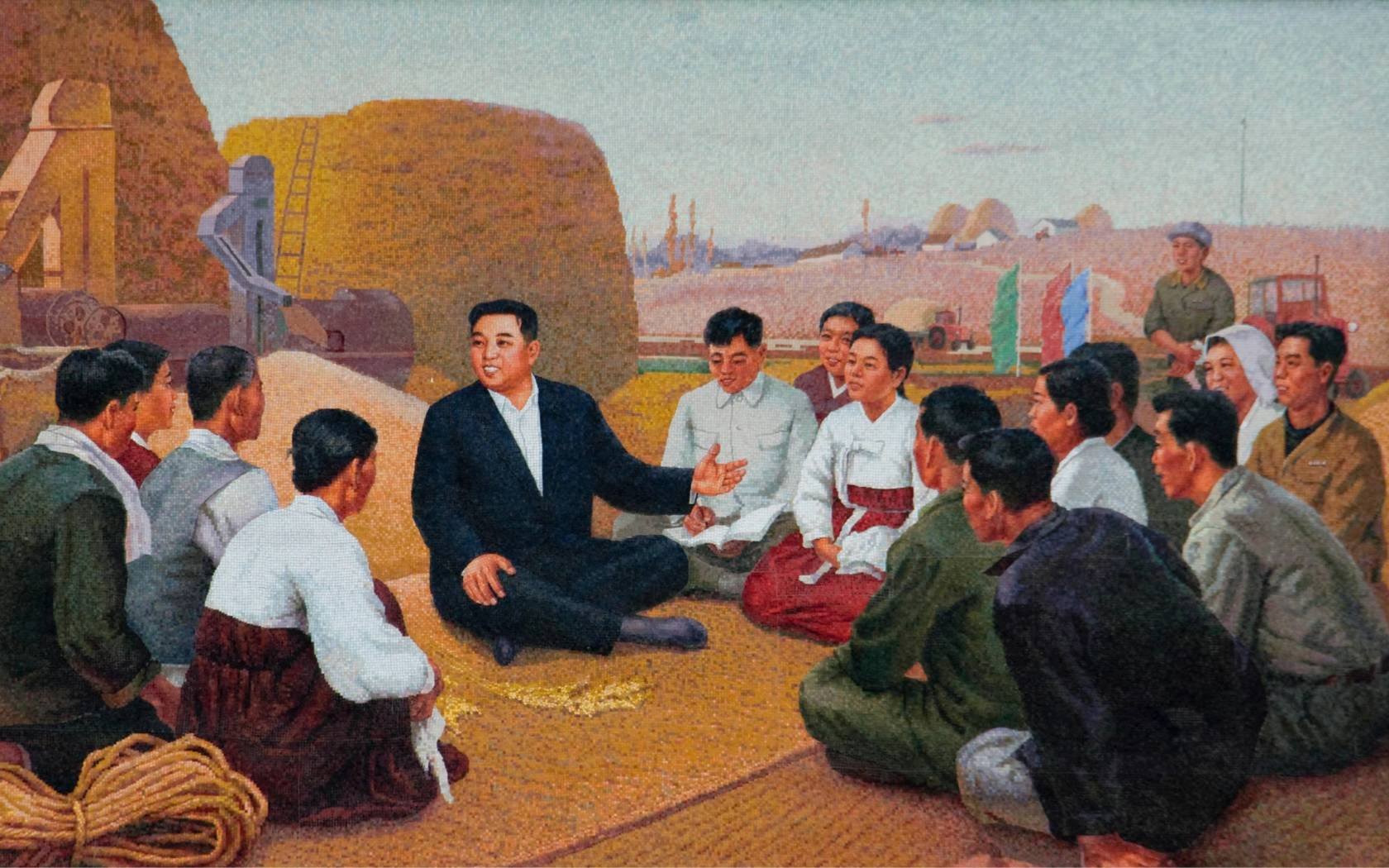
When the Soviet Union chose Kim Il Sung to lead what would become North Korea at the end of the Second World War, his patrons in Moscow helped him launch a personality cult modelled after that of Joseph Stalin – just as they did for the Soviet Union’s other socialist-bloc allies.
Within a few years, however, Kim had taken control of his personality cult and refashioned it to such a degree that Eastern European allies began expressing alarm at how little Kim’s personality cult resembled Marxism-Leninism.
It was perhaps not a coincidence that Kim Il Sung was a former Sunday school teacher and church organist born and raised in a devout Presbyterian family on the outskirts of a city, Pyongyang, that was so thoroughly Christianised it was known as the ‘Jerusalem of the East’.
The Great Leader, as Kim Il Sung was known to his followers, deployed his fluency in the rituals, doctrine and iconography of religious faith to cultivate an air of adulation around him that quickly surpassed that of Stalin and Mao Zedong.
By the 1970s, as Kim solidified his control over the hearts and minds of his tens of millions of followers, he erected thousands of statues, busts, mosaics, obelisks, museums and other monuments to his genius – tangible symbols of a personality cult more all-encompassing than any ever seen in human history.
As Kim Il Sung’s cult of personality climbed to dizzying heights, the Great Leader struck up relationships with two men who, like Kim, intuitively understood the power of religious faith and the ways in which it could be uniquely employed to cultivate a loyal and unwavering devotion.
One of the two men, Rev. Sun Myung Moon, had much in common with Kim Il Sung. Rev. Moon was born eight years after the Great Leader in a thatched-roof home in north-western Korea and raised in a devout Presbyterian home before making his public debut in Pyongyang shortly after the Japanese surrender in August 1945. Years later, Rev. Moon, looking back on those turbulent days, described Korea as hungry for a Messiah: ‘The depth of Christian faith in Korea was extraordinary at that time. Also, there were many spiritual groups who received prophecies about the coming of a new spiritual movement.’ Rev. Moon was happy to oblige and in time would, like Kim Il Sung, command absolute fealty from his followers, who believed him to be the Messiah and were, in the words of one disciple, ‘ready to face martyrdom gloriously’. Rev. Moon’s belief that Korea was a chosen land, and the Koreans a divinely anointed people, also meshed with Kim Il Sung’s own brand of Korean exceptionalism.
The problem for Rev. Moon was that, in Pyongyang at the time, it was Kim Il Sung who was in power and who had presented himself as the saviour of the nation, a status that didn’t leave much room for competing messianic claims – particularly from an upstart preacher claiming to be the Lord of the Second Advent who had identified Pyongyang as ‘the Second Jerusalem’. As Rev. Moon began attracting large numbers of followers, Kim Il Sung’s Soviet-backed regime arrested Rev. Moon in late 1945 and again in August 1947, torturing him before releasing him; after a third run-in with the authorities in February 1948, Moon was convicted of ‘advocating chaos in society’ and sentenced to five years at a labour camp in the north-eastern port city of Hŭngnam. In part because of the brutal treatment he had suffered under Kim Il Sung, Rev. Moon established himself as a fierce anti-Communist as he built the Unification Church into a global force in the 1970s. Rev. Moon attracted global headlines for his evangelisation techniques, the mass weddings that he presided over, his family’s extensive business dealings, his close personal ties with President Richard M. Nixon and other Republican Party figures, and, above all, his millions of devoted followers, known pejoratively as ‘Moonies’.
By the 1980s, with Rev. Moon and Kim Il Sung having consolidated control of their respective kingdoms, the two men enjoyed a détente that blossomed into full-blown embrace, complete with a meeting in Pyongyang between the two Korean Messiahs, the construction of a lavish Unification Church-owned hotel in the North Korean capital, and even a joint venture manufacturing automobiles. It is not hard to guess what the two men saw in each other: though ostensibly ideological adversaries, each recognised in the other an appreciation of how faith could be harnessed to great effect. As Moon’s erstwhile daughter-in-law put it after abandoning the faith she was raised in: ‘The Unification Church is a classic example of what psychologists call a cult of personality.’
During this period, Kim Il Sung struck up another unlikely rapport – this time with a man hailing from a very different background from his own. Jim Jones was born in Indiana nearly two decades after the Great Leader’s birth. Unlike Kim, Jones was not raised in the church, though, after finding himself spellbound by a local preacher, he knew he had found his life’s calling. Rev. Jones, modelling his ministry on a mystical Philadelphia preacher called Father Divine, began drawing followers around him in San Francisco, promoting what he called ‘divine socialism’ and demanding more and more loyalty from his growing flock.
In his teachings, Rev. Jones blended Christian scripture with elements of Marxism, layered over with his own paranoias, which he encouraged among his disciples by staging attacks on himself and by hosting blistering public denunciations under the guise of ‘family meetings’. Like Father Divine, Rev. Sun Myung Moon and Kim Il Sung, Rev. Jones had his disciples call him ‘Father’ and made it increasingly difficult to leave or to question his authority, warning defectors of a ‘death sentence’.
As Rev. Jones’s cult of personality intensified, he moved nearly a thousand followers to a remote settlement in Guyana that would come to be known as Jonestown. There Jones used hard labour and sleep and food deprivation to create an ‘atmosphere of anxiety, hysteria and depression’, in the words of the few defectors who made it out; he encouraged followers to inform on others and created a surveillance force to keep tabs on possible dissidents. Jones steadily replaced Christ with his own personality cult, for instance having his followers sing praise songs to him on 25 December, newly rechristened ‘Revolution Day’. Jones imposed an information blockade on Jonestown, censoring and then banning postal communication with the US, while presenting to his devotees a steady stream of grim headlines from America – murder, racism and the like. Across Jonestown, omnipresent loudspeakers broadcast Rev. Jones’ teachings and warnings, which were played virtually around the clock in an incessant drone.
Jones shared more than a common playbook with the North Korean leader; the Indiana-born preacher and the son of Korean Presbyterians also became mutual admirers of sorts. Rev. Jones had adopted three children of Korean heritage, all refugees of the Korean War, a conflict that he commended as a ‘war of liberation’ by the socialist North. When North Korea, which Rev. Jones looked to as a model for his own religious society, tried to reach out to Jonestown leadership in early 1978, Jones was flattered.
Leaders of his Peoples Temple of the Disciples of Christ met more than a dozen times with Kim Il Sung’s envoys, exchanging propaganda and tactics; after one meeting, Jonestown leaders declared themselves impressed by the ‘reverent religious feeling’ that the North Koreans evidently had for Kim Il Sung. During mandatory meetings at Jonestown, Rev. Jones read aloud from North Korean publications extolling the Great Leader, screened propaganda films from Pyongyang for his followers, and even invited North Korean agents to preach the virtues of Kimilsungism. ‘They exalt their leader as a – as a saviour, as a god,’ Rev. Jones told his followers in one August 1978 address. ‘He uses that power, not to corrupt, but to give power to the people.’
With Jones fearing US authorities closing in on him, he inquired with North Korean diplomats about relocating his flock to Kim Il Sung’s socialist paradise. ‘North Korea flowers in democracy with free health, free medical care that is, free meals, collectivism,’ Rev. Jones said in an October 1978 sermon. The move never happened. Weeks later, on 18 November 1978, with scrutiny of Jonestown intensifying and a visiting US congressman gunned down, Rev. Jones ordered roughly a thousand of his followers to commit ‘revolutionary suicide’. Photos of the aftermath became one of the defining images of a troubled decade, and Rev. Jones’s original San Francisco temple was later auctioned off – to a Korean Presbyterian church.
Though North Korea insisted its ideology was atheistic, Kim Il Sung’s rapport with Revs. Moon and Jones was no accident. In their own ways, in their own milieus, each of the three men honed remarkable personality cults that combined messianic promise and psychological control to turn religious faith into an instrument of power. As with so many religious societies of this kind, their grip on their followers rested on two implicit axioms: the leader is always right, and nobody leaves.
This article is excerpted from ‘Korean Messiah: Kim Il Sung and the Christian Roots of North Korea’s Personality Cult’ by Jonathan Cheng. Reprinted by permission of Alfred A. Knopf. Jonathan Cheng is a finalist for the 2026 Cundill History Prize.