Marc Bloch’s physical and intellectual courage
- November 26, 2026
- Margareta Melén
The professor-turned-Resistance-fighter redefined history as a faculty to understand the living.
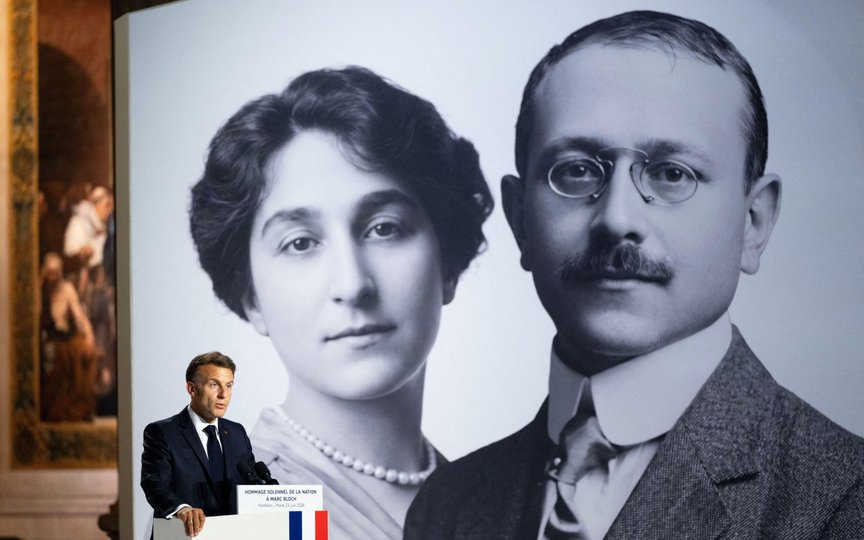
In the spring of 1943, the French Resistance recruited somebody who was, as it turned out, indispensable. The medieval historian Marc Bloch, a 56-year-old father of six, who, with his silver-grey hair, walking cane and briefcase, was the very image of a distinguished Sorbonne professor until the Vichy regime and its antisemitic legislation forced him into hiding.
Before long, he was involved in every aspect of Resistance operations, from passing secrets to young men in sheepskin jackets in the back streets of Lyons – his face as unreadable as when he set essays for his students – to making sure the Rhône-Alpes network was as effective as possible. One of his fellow fighters later said that the Resistance in the region could be split into two phases: before Bloch, when it was all about individual courage and determination, and after Bloch, ‘when there really was an organisation’.
As the historian Annette Becker noted in the foreword to L’histoire, la guerre, la résistance, a 2006 collection of his writings, for Bloch the Resistance was a way ‘to continue living by never ceasing to be a historian’. The analytical and organisational skills he had honed over a long academic career were the reason for his decision to enlist in the Resistance. He knew he could contribute, despite his age.
On 23 November 2024, to mark the 80th anniversary of the liberation of Strasbourg, President Emmanuel Macron announced the long-awaited decision to induct Bloch into the Panthéon, the national mausoleum in Paris – a popular choice made by a less than popular president. The ceremony itself was on 23 June 2026. It was 82 years almost to the day since Bloch was executed by firing squad in 1944, along with 29 fellow Resistance members, on the orders of the ‘Butcher of Lyons’, the Gestapo chief Klaus Barbie. Bloch had been tortured for weeks, but never gave away any information about himself or the other Resistance fighters. The Allied landings in Normandy had begun only a fortnight earlier.
The Bloch family had agreed to the ceremony at the Panthéon on two conditions. One was that the far right should not be permitted to attend. The other was that Bloch’s ashes should remain buried in the village of Le Bourg-d’Hem in central France. For his panthéonisation, there was instead a cenotaph or symbolic coffin in his memory. Bloch’s wife and close colleague, Simonne Vidal, was honoured on the same occasion. Following his arrest, she had made her way to Lyons, although she was seriously ill, and died there in hospital on 2 July 1944, probably unaware of her husband’s fate. She was buried in a mass grave under a false name. Their six children all survived the war.
Born in Lyons in 1886 – the city gave his life a tragic symmetry – to a secular, assimilated Jewish family, Bloch spent his childhood in Paris, where his father, Gustave Bloch, was a professor of classical history. The young Bloch grew up imbibing liberal values and patriotic republicanism in a France deeply divided by the Dreyfus affair. His father was not a Dreyfusard at first, but like many other intellectuals he became a staunch supporter. The memory of his father’s steadfast commitment stayed with Bloch throughout his life. Like his father, being French was central to his identity, but the reality of antisemitism made it important for both of them to be open about their Jewish heritage.
Bloch also shared his father’s love of history; he would later speak of ‘the nearly universal fascination of history’ and how Alexandre Dumas’ readers ‘may well be potential historians’. When one of his sons asked him what the point of the subject was, it got him thinking about the use of history, which he crystallised in his famed unfinished essay, Apologie pour l’histoire (The Historian’s Craft). He worked on it when he was on the run during the Occupation, with no access to a library or even his own books. As he admitted: ‘I am forced to rely on my notes and my memory.’ Even so, he managed to write what the historian Peter Burke hailed in The French Historical Revolution as ‘a lucid, moderate, and judicious introduction to the subject – still one of the best we have’.
Published posthumously in 1949 and translated into several languages, beginning with English in 1953, The Historian’s Craft has earned its reputation as a timeless classic. Strangely, there was no Swedish translation until Johan Wollin’s in 2022, an odd delay in view of the essay’s historical significance, and all the more so because Bloch wanted to address as wide an audience as possible. It is less a handbook of historical methodology than a personal essay about, in his words, ‘how and why a historian practises his craft’. He never lost sight of his son’s question – ultimately, he was concerned with the legitimacy of history as a discipline.
For Bloch, it was absurd and misleading to describe history as ‘the science of the past’. The past may be immutable, but our knowledge of it is in constant flux. He also took issue with his day’s ‘modernist twist’, which left a ‘machine-dominated mentality’ convinced ‘that an analysis of their antecedents is just as useless for the understanding and solving of the great human problems of the moment’. Equally, it was important not to lose sight of the present, because the historian’s vocation is ultimately to understand the present through the past and the past through the present.
Bloch was respected in his lifetime as a medieval scholar and leading light of the Annales school, named for the academic journal he founded in 1929 with his friend and colleague Lucien Febvre, when they were both working at the University of Strasbourg. In the 1970s, the international interest in the history of mentalités led a new generation to rediscover Bloch. One of his pioneering contributions was his early interest in fake news, which we often think of as specific to the digital age. In his 1921 essay Réflexions d’un historien sur les fausses nouvelles de la guerre (Reflections of a Historian on the False News of the War), he drew on his own experience of rumours in the First World War trenches and his later research about mass delusion to argue that false news often originated in a single ‘error’ that could only survive ‘on one condition – that it finds a favourable cultural broth in the society where it is spreading’. It was how ‘people unconsciously express their prejudices, hatreds, fears, all their strong emotions’. Only shared, intense emotional states had ‘the power to transform a misperception into a legend’.
At the time, Bloch was probably working on Les rois thaumaturges (The Royal Touch), a study of religious psychology published in 1924. The book examined a belief in Britain and France, which persisted from the Middle Ages until the 18th century, that a king or queen could cure those with scrofula, a form of tuberculosis, simply by touching them. Today, Bloch’s study is acknowledged to have been one of the first histories of mentalities.
His subsequent works – a study of the development of French agrarian society, Les caractères originaux de l’histoire rurale française (1931), and his magisterial account of European feudal society, La société féodale (1939-40) – were part of the ‘new history’ espoused by Bloch, Febvre and other radical historians. The movement emerged in reaction to traditional history’s preoccupation with great men and politics, and what Bloch called long lists of disconnected facts. The Annales school championed history in the longue durée, with interdisciplinary and comparative perspectives, the use of non-written sources, and new fields of research such as the history of the human body or, as Bloch preferred to call it, ‘the adventure of the body’.
Bloch’s plans to emigrate to the US with his extended family came to nothing once France was occupied. His friendship with Febvre barely survived their disagreement about how to ensure the survival of their journal. As the Swiss historian Bertrand Müller points out in his introduction to the first volume of Bloch and Febvre’s correspondence (1994), the two men were ‘not only editors-in-chief of a journal, but also the owners of a ‘‘half-Jewish business’’’, so Annales could be seized or shut down at any moment. Alarmed, Febvre demanded that Bloch sign over full control to him and agree to have the name ‘Bloch’ removed from the journal’s cover. Febvre did not see this as a concession to the Nazi occupiers or the Vichy regime, but, instead, in Müller’s words, as a way of ‘not abandoning every cultural and scholarly endeavour to the enemy’. Although Bloch was anything but convinced by Febvre’s arguments, he reluctantly agreed to use a pseudonym in the temporary journal that replaced Annales.
Opinions vary about Febvre’s actions – ‘not his finest hour’ being one of them – but their friendship did survive, however strained. It was Febvre who arranged for the posthumous publication of The Historian’s Craft, which Bloch had dedicated to his friend with the words: ‘Long have we worked together for a wider and more human history.’ It said a great deal about both men’s dedication to their shared vision.
As Jacques Le Goff, another historian of the Annales school, noted in his foreword to The Historian’s Craft, what made Bloch an inspiration for more recent historians was his ‘remarkable talent for transforming his experience of the present into historical reflection’ – something especially evident in his second posthumous work, L’étrange défaite (The Strange Defeat), published in 1946. For Le Goff, it was probably ‘the most perceptive study ever undertaken into what led to the French defeat in 1940 and the form it took’. After Bloch’s death, his friends managed to save the manuscript for posterity by smuggling it to safety, having moved it between various hiding places. Although Bloch had written it in exceptional circumstances as events unfolded, Le Goff is correct that he still managed to address his readers ‘as a historian and not as a journalist’. Bloch combined physical courage with a bold, open mind that in many ways made him a timeless historian.
That was the secret to Bloch’s posthumous career. In his own reflections on the discipline of history, he often returned to one of his sources of inspiration: a visit to Stockholm in 1928 with his friend and mentor, the Belgian historian Henri Pirenne. No sooner had they arrived than Pirenne insisted they go straight out to see Stockholm’s new city hall. ‘If I were an antiques dealer’, he explained to Bloch, ‘I would only care about old things. But I am a historian. Therefore, I love life.’
Bloch would look back on Pirenne’s words as a slightly flowery illustration of the historian’s most important quality: the ‘faculty of understanding the living’, cultivated by following Pirenne’s example of ‘keeping in constant touch with the present day’.
What history lay in Bloch’s future at the time of his death? It seems likely that he would have continued to search and research indefinitely. As he put it in the final sentence of The Historian’s Craft: ‘In history, as elsewhere, the causes cannot be assumed. They are to be looked for…’
This article was originally published in our sister publication, Axess Magasin. Translated by Charlotte Merton.


