Iran’s quest for its own Monroe Doctrine
- November 24, 2026
- Meir Javedanfar
- Themes: Geopolitics, Iran, Middle East
The Islamic Republic aims to drive the United States from the Middle East – and then assert its regional supremacy.
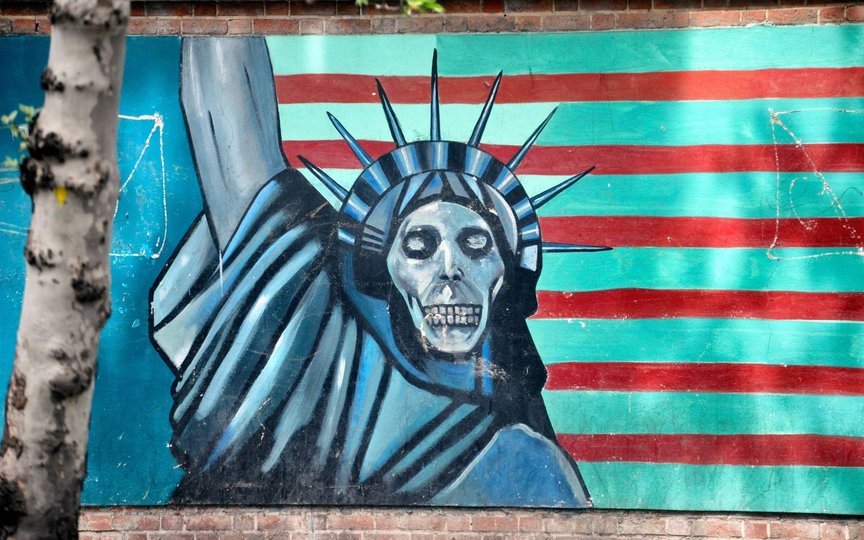
President Trump is looking for a new nuclear deal with Iran. But what the leadership of the Islamic Republic of Iran is looking for is something beyond that: its own version of the Monroe Doctrine.
Outlined in 1823 by President James Monroe, the doctrine asserted that the United States would not accept any new European colonisation or military intervention in the Americas. Today, Iran wants an equivalent agreement, one that declares the Middle East off limits to American forces. This is why the withdrawal of US troops from the Middle East, which Iran refers to as ‘West Asia’, has been one of Iran’s preconditions for an agreement. Iran uses this term to refer to the Middle East because it sees the latter as a Eurocentric definition, created by the imperialist powers.
The leadership of the Islamic Republic sees the current conflict as an unmissable opportunity to establish a new sphere of influence for itself in the region. Powerful figures, such as Rezaei and Ali Akbar Velayati, adviser to Iran’s supreme leader on international affairs, call this the ‘emerging West Asian order’. In this new order, the US will no longer have any bases in the region, while any new regional arrangement must include Iran’s concerns and considerations.
Fulfilling this goal will not be easy and Iran’s leadership realises this; accordingly, it has moved beyond rhetoric towards action to fulfil its ambition, pursuing a two-pronged strategy.
First, it has attacked regional countries that host American military bases on their soil. This is why Iran has targeted all the Arab Gulf states and Jordan during the recent war. Iran hopes that this will force the host countries to view these bases on their soil as a liability, and conclude that US bases attract insecurity and conflict, rather than security and stability. As the speaker of Iran’s Parliament, Mohammad Bagher Ghalibaf, stated in May this year: ‘some governments in the region believe that the presence of America will bring them security. But recent events [i.e. attacks against US bases in Gulf countries] have illustrated that such a presence does not create security, rather, it creates insecurity for them’.
Second, it has sought to establish control over the Strait of Hormuz through attacks against ships that wish to pass through it without Iran’s permission. This is in addition to insisting that Iran retains control over this important waterway as part of a future agreement with the US. The Strait is a vital economic artery for the Gulf Cooperation Council (GCC) countries. Controlling it gives Tehran immense leverage to pressure these nations into downgrading or expelling American forces.
This strategy risks pushing the Gulf countries further towards the US. However, Iran believes that, ultimately, these countries will reach the conclusion that Washington is an unreliable partner. Just as it abandoned Afghanistan and left its Kurdish allies in Syria high and dry, it will also abandon its Persian Gulf partners for the simple reason that it does not have the stomach or incentive to pursue a prolonged conflict far away from its own borders.
One of the key challenges faced by the Monroe Doctrine was enforcement. On numerous occasions, European powers defied the doctrine by intervening militarily in the Americas, including Britain seizing the Falkland Islands in 1833 and the French intervention in Mexico in 1861. Originally underwritten by British naval supremacy, Washington’s claims over the Western Hemisphere were only truly enforced when the United States emerged as a major military and naval power during the late 19th and early 20th centuries.
By insisting on formal control over the Strait of Hormuz as part of a final deal with Washington, Iran wants to ensure that, unlike with the original Monroe Doctrine, it has the means to enforce its own version. The Islamic Republic’s missile and drone arsenal, generated by the regime’s domestic production capabilities, have already inflicted heavy military and economic costs on its adversaries. Securing total control over the Strait, backed by Iran’s armed forces, would provide Tehran with credible deterrence against both foreign powers seeking to deploy forces to the region and regional states that consider hosting them.
Iran’s current strategy has been shaped by several developments since 7 October 2023, many of which have been against Iran’s interests. Chief among them has been the weakening of Iran’s ‘Axis of Resistance’. This has been through the loss of the Assad regime in Syria, and Iran’s Hamas and Hezbollah allies becoming militarily weakened. Iran believes that the best time to compensate for these losses is now by using the leverage afforded by its hold over Hormuz and attacks against Persian Gulf countries.
The emphatic defeat suffered by President Trump’s Republican Party in the US midterm elections has emboldened Iran’s decision-makers. The Islamic Republic’s leaders believe that the American people have shown that they are unwilling to pay the price of war against Iran, owing to the costs imposed by Iran through attacks against oil and gas installations and transport networks, which have driven up the price of energy. As the Secretary of the Supreme National Security Council, General Rezaei stated the day after the midterms, ‘the great people of Iran imposed a strategic defeat on the US on the battlefield and in the Strait of Hormuz, and a political defeat against Trump’.
The Iranian leadership’s resolve is further strengthened by the belief that a US departure from the region would strengthen its standing at home, allowing the regime to present itself as victorious in its conflict against a mighty foe and vindicating its claim to be the region’s greatest power. Ultimately, the Islamic Republic wants the Trump administration to recognise it as the main power in the Middle East, just as it has recognised China as the superpower of the Far East, and Russia as a major European regional power. The regime’s leaders believe that Iran deserves a seat at the table of great powers and should be invited to diplomatic conferences, such as the trilateral summit between Xi, Putin and Trump that took place on 19 November in China. They do not expect their Russian and Chinese allies to negotiate on their behalf.
History has taught Iran’s leaders that despite warm words of friendship, the leaders of China and Russia put their own interests above those of Iran. They are even willing to use their influence over Iran as a bargaining chip in their dealings with the US at Iran’s expense.
The leadership of the Islamic Republic regards the ongoing war as a convergence of opportunities that must be leveraged to reshape the regional balance of power in its favour. To do so, it needs to push the US out, and to make sure it stays out. The leverage it has gained through recent events is one it believes it can use to redraw the map of the region, assert local supremacy, and exclude hostile foreign forces. In short, it wants to secure for itself in the Middle East what President Monroe proclaimed for the United States in the Western Hemisphere in 1823.
Meir Javedanfar


More from Iran
Why the Gulf states won’t side with America

The art of a bad deal

Has Iran won the war by not losing?

Why Iran will not fracture along ethnic lines


