Saki’s two selves
- November 5, 2026
- Philip Womack
Oliver Soden’s elegant biography of H.H. Munro, better known as Saki, reveals a complex man: was his real character the dandy who skewered the English upper classes, or the fervent patriot who died in the trenches?
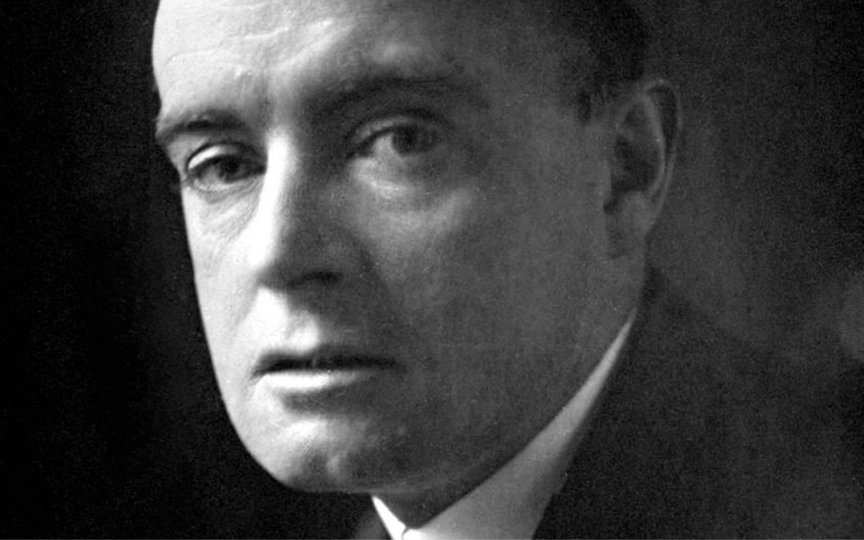
Super-Beast: The Mysterious Life of Saki, Oliver Soden, Weidenfeld & Nicolson, £24.99
In 19th-century Dresden, at an ordinary girls’ school, the pupils sitting quietly at their lessons were alarmed by a grotesque human figure which suddenly appeared at the balcony window and dangled up and down. After the screams had died down, closer inspection revealed it to be a dummy, constructed from a stuffed swimming costume. The dangler (presumably stifling his laughter upstairs) was a young Hector Hugh Munro (H.H.), on holiday with his family; the practical joke of a sort that he already loved, puncturing pomposity and order.
This is precisely the kind of spirit, absurd yet frightening, that was to animate his fictional works, and which would form him into one of the most influential writers of the 20th century.
Under the pen-name ‘Saki’, derived from an ephebic cupbearer in the Rubaiyat of Omar Khayyam, Munro constructed a glittering, savage milieu, where the drawing-room hypocrisies of the upper-middle-classes are mercilessly exposed. His agents of chaos are manifold: some are elegant young men who admire buttonholes and cufflinks, and bear romantic names like Reginald and Clovis Sangrail. More often than not, the disruptors are young children or animals, ruthlessly unsentimental, and devoted to the remorseless logic of truth.
Every Saki aficionado has a favourite story: mine is ‘Tobermory’, in which a professor teaches a cat to talk at a house party. Instantly, the feline gossips, revealing the secrets of the guests, who blench. One Odo Finsberry, ‘a young gentleman who was understood to be reading for the Church’, leaves the room, ‘possibly disturbed at the thought of scandals he might hear concerning other people.’ That is a typical Saki line, seemingly innocuous, its biting double-edge arriving just a second after first reading.
Munro is often conflated with the cruel, dandyish protagonists of his stories: but, as Oliver Soden shows in this thoroughly researched, elegant and stylishly written biography – the first since A.J. Langguth’s in 1981 – he was much more complex. The bluff, conservative military persona of his later life seems entirely at odds with his gorgeous characters, and with the epicene poses of his young adult years.
‘He had an uncanny ability to disappear,’ notes Soden. For a man of his time, very few letters survive; no archive has thrown up any secrets. Munro did not keep a journal, and even tangible objects – like a heart-shaped locket bearing an inscription from a man named Cyril, which hints at a homosexual life – tend to be slippery. This locket, set with a turquoise, vanished from a relative’s attic, as if, notes Soden, it were made of ‘smoke’.
Munro came from an ordinary background: his military family was deeply conservative, and not particularly rich; a far cry from the aristocratic-adjacent salons that Munro so winningly depicts. Indeed, one of the major questions about Saki’s work, which troubled even his early readers, is whether the stories are supposed to be satires: are we meant to despise his empty, over-articulate rakes, or to delight in them? This dichotomy is reflected in Munro’s personality, too, and it is one which is never entirely resolved. Munro held two selves within him, one dripping with cut-glass, anti-establishment epigrams; the other steeped in patriotic fervour and duty.
Like so many writers of the period, Munro was a child of Empire, born abroad in 1870. His father was a distinguished soldier, and, after Munro’s mother died, he and his two older siblings were packed off to England to be cared for by a brace of aunts, Charlotte and Augusta, who absolutely loathed one another. Aunts, of course, are a major theme in Munro’s stories, usually cast as oppressors. One of Munro’s best-known stories, ‘Sredni Vashtar’, concerns Conradin, a sickly little boy whose ghastly ‘cousin’ takes away his pet Houdan hen. But unknown to the cousin, a magnificent pole-cat ferret is lurking in the same shed.
Conradin prays fervently to the beast, turning him, in his imagination, into a god: and soon the ‘cousin’, an aunt in all but name, meets her doom, at the jaws of Sredni Vashtar. Conradin, entirely unruffled, simply butters another piece of toast. The story displays all Munro’s concerns: children, revenge, animals, an almost psychopathic indifference to death, and the sense of wildness set loose among the silver tea-sets.
Though Soden is (understandably) wary of drawing direct autobiographical inferences from the stories, he allows that this is a fictional revenge on the ghastly aunt Augusta: Munro himself, also a sickly child, owned a Houdan hen, which he petted ‘as he might a puppy’. The hen died, though it’s not known exactly how. This love of animals was a constant throughout his life: later, he tamed a squirrel, and even kept a pet tiger cub.
Munro’s comic spirit was evident from an early age: aged eight, he told a neighbour that her daughter was busy ‘enjoying all kinds of debauchery’. When even younger, he chased his siblings round a table, holding aloft a burning hearth-brush and shouting ‘I’m God! I’m going to destroy the world.’
Soden is ambivalent about Munro’s sexuality, stating that homosexual feelings need not preclude heterosexual ones. Yet Munro is often claimed as a ‘queer’ writer, and his stories certainly fit into the definition of ‘camp’. His protagonists are handsome, interested in clothes and decoration, and deploy wit as a weapon to survive. Throughout the biography, Soden fits Munro into the tradition of Uranian poetry (late 19th-century verse that celebrated the beauty of the male form), and demonstrates Munro’s deep connections to Oscar Wilde: Munro befriended Wilde’s lover, Robbie Ross. Munro also met John Addington Symonds – another admirer of beautiful young men, though Munro’s sister, Ethel, later claimed they only talked about chess and heraldry. These, I presume, are not code words for buggery.
Symonds described his lust for men as ‘the wolf’, and it is striking how often wolves appear in Saki’s stories, not least in ‘Gabriel-Ernest’, in which a typically luscious teenaged boy reveals himself to be a werewolf. There is no concrete evidence of sexual relationships, but Soden does note Munro’s frequent visits to Turkish baths, and a friendship with a much younger man. One biographer claimed that the mysterious squiggles in Munro’s appointment book are marks of sexual encounters: Soden is unsure.
Aside from sexuality, Munro’s exciting life provided much material for his stories. He was sent off to join the Burmese police; returning, with his father’s blessing, he joined the ranks of scribbling hacks, gaining access to a number of fashionable people, while remaining generally solitary. He also became a foreign correspondent in the Balkans and Russia, where he witnessed the early rumblings of revolution.
None of this changed his essentially conservative outlook; by the time the First World War broke out, we find Munro jingoistic and even, in his 1913 novel When William Came, a pro-war propagandist. Soden views this as a reaction against his Uranian youth, stemming from a conscious repression of his sexuality.
Whether or not this is the case, Munro was beloved by his men – he remained in the ranks, even when offered a commission – and kept them cheerful ami the hell. He died in the trenches, shot in the head, his last words reported as ‘Put that bloody cigarette out.’
In many ways, Munro’s trajectory was similar to that of Evelyn Waugh, another writer who began by satirising the aristocracy and ended supporting the status quo. Alive to these contradictions, Soden has done an admirable job of distinguishing the man from the works, and he does it with a passion and wit of his own. This is an essential book, both for lovers of Saki, and for those who desire to enter his silken, seductive, perilous world, where wolves howl, cats speak, and epigrams become a matter of life and death.


