As young conservatives idolise Nixon, his portraits of the leaders he knew make for a fascinating, if somewhat self-serving, read.
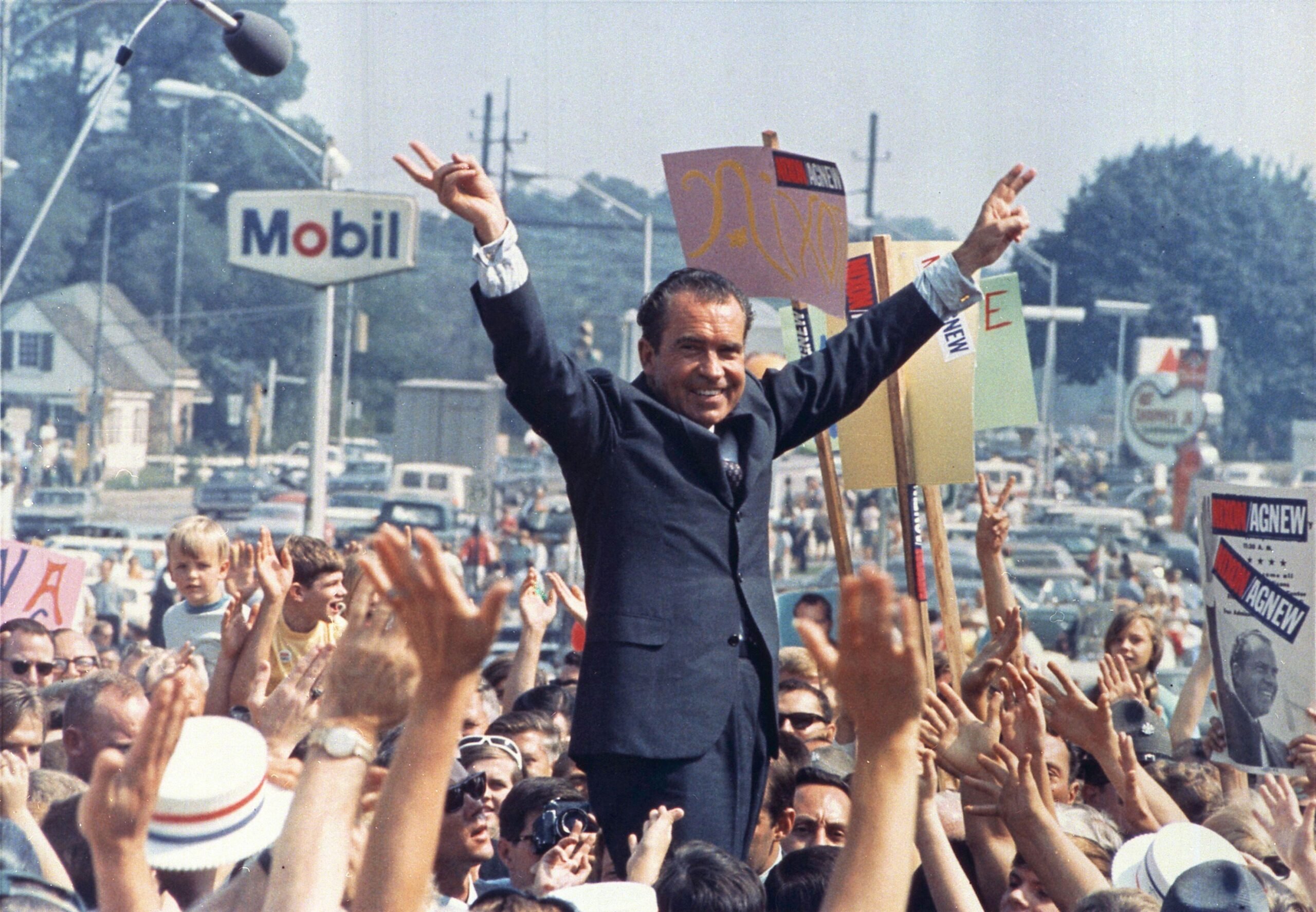
‘Nixonmaxxing’ is a thing, apparently, though despite the attempts to revise the reputation of the 37th president – the man behind the greatest political scandal of recent times – you would still not buy a used car from him. You might, however, want to read Leaders, his reflections, first published in 1982, on the great (though not necessarily good) political figures he dealt with during his time at numerous top tables. The opening chapter, on Churchill, is admiring, genuinely warm, and touching in its account of Nixon’s first meeting in 1954 with the ailing, past-his-best but still belligerent PM. De Gaulle is a giant in every sense, though Nixon judges Adenauer to be his equal. Franco is ‘so different in private from his public impression’. In truth, Leaders is a mixed bag. His portrait of MacArthur, for example, is banal, but Nixon is excellent at dissecting ‘enemies’ such as his Soviet and Chinese contemporaries, and often amusing. ‘In their personal diplomacy Khrushchev and Brezhnev were similar to Lyndon Johnson,’ he writes. ‘They felt compelled to reinforce their words with some sort of physical contact.’ Ultimately, though, one feels that Nixon wrote the book as an act of self-justification, to stake his claim to be a leader of equal status to his subjects: ‘The final verdict of history is not rendered quickly,’ Nixon reminds us. A fascinating, if somewhat self-serving, read.
Levit’s resistance
Igor Levit, one of the greatest pianists of our age, also fancies himself as something of an activist. Hence, despite his brilliance in Bach and Beethoven, his audiences are sometimes condemned to listen to agitprop like Frederic Rzewski’s The People United Will Never Be Defeated! Thankfully, his latest recording – Resistance – is a pairing of just two, much greater, works. The first is a thrilling account of Arnold Schönberg’s Ode to Napoleon Buonaparte, a setting of Byron’s poem against tyranny, composed in the wake of the attack on Pearl Harbor when Schönberg was exiled in LA: ‘I knew it was the moral duty of intelligentsia to take a stand against tyranny.’ The text is pretty much snarled out by the actor Dörte Lyssewski to the backing of Levit and the Kammerakademie Potsdam under Antonello Manacorda. The second piece is an engrossing account by Levit alone of Franz Liszt’s transcription for piano of Beethoven’s Third Symphony, the Eroica, whose dedication to Napoleon was withdrawn when he crowned himself emperor and his true nature became apparent. Whatever one thinks of Liszt as a composer (Me? Meh), he is an arranger of genius and Levit does the work justice.
The limits of artificial consciousness
After Yang, a 2021 film by Kogonada, the Korean-American film-maker, tells the story of a couple, Jake and Kyra (Colin Farrell and Jodie Turner-Smith), who buy a ‘Chinese’ technosapien, Yang, to look after their adopted Chinese daughter, Mika. When Yang ‘dies’, an existential crisis ensues, as the visceral desires of humans override what technology promises to provide. A timely meditation on the inadequacies and limitations of artificial consciousness.