The genius of Theodore Roosevelt’s New Nationalism
- November 17, 2026
- David Cowan
In an age of radical technological change, Theodore Roosevelt’s politics of broad-based prosperity show that capitalism can be made to work for ordinary Americans.
Republicans were dealt an historic and damning defeat in this year’s midterms, but the Democrats also found a powerful formula that has a long pedigree in American politics. Rather than doubling down on identity politics, Democrats focused on affordability and corruption as their campaign themes. Donald Trump upended American politics a decade ago with his own appeal to the ‘forgotten American’, pledging to drain the swamp and end the forever wars. How has that turned out?
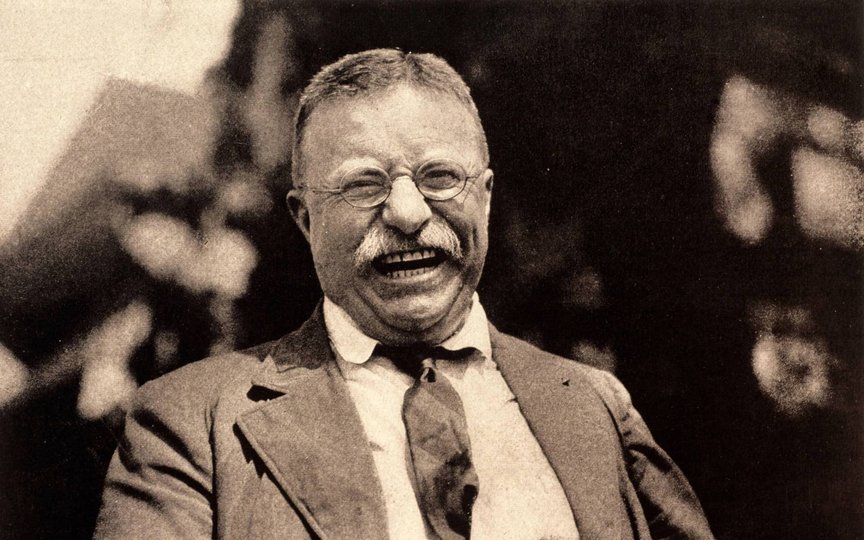
The irony is that at the turn of the 20th century, it was the GOP that delivered popular and radical change after the corruption, poverty and inequality of the Gilded Age thanks to another brash New Yorker. Theodore Roosevelt was one of the most energetic and intelligent men, and one of the greatest, to occupy the presidency. He was a model of the dynamic spirit at the heart of the American Century. Roosevelt inspired reformers in New York City, across the Midwest and all the way to the Pacific Coast. Roosevelt continues to have a hold on the American imagination with his life of adventure and distinctive blend of nationalism with progress. Roosevelt’s memory has often been co-opted by the Left, but he deserves to have his place in the Right’s pantheon, too. The reason is that he understood how capitalism could only endure if prosperity could be enjoyed by as many people as possible. Roosevelt represented the politics of broad-based prosperity.
In Roosevelt’s time, rapid industrialisation had transformed the United States, but also brought a host of major new problems. Poverty, exploitation, poor public health, low levels of education, unemployment, insecure work and so on, afflicted the lower orders of society. The American middle class was growing, but not fast enough. Today we also live in an era of radical technological change, driven by artificial intelligence, that will upend our economies and demand a rewriting of the social contract. Markets can create efficient outcomes and accelerate growth, but how this growth is cultivated is also important. Roosevelt believed that economic growth should be to the advantage of, not at the expense of, ordinary working Americans.
During the Gilded Age, pressure for reform began outside the political establishment through a broad coalition of agrarian populists, urban progressives and elite technocrats. This growing set of voices made the case for regulatory reform, at the state and federal levels, to constrain the excesses of big businesses, to make them accountable to citizens as consumers, workers and custodians of the landscape. Progressives wanted to modernise government and catch up with the complexities of the industrial economy and urban population centres. Americans had long been sensitive to the dangers of big government, but not big business. The drive to hold businesses accountable and address economic concentration was powered by the same fear and scepticism of unchecked power.
Roosevelt represented the eastern wing of progressive Republicanism, which was largely upper middle class, highly intellectual and allied to the professions. He quickly developed his reputation as a reformer during his terms as an assembly member, police commissioner, then governor in New York. Roosevelt believed in good, honest and efficient government. Corruption in the police and civil service was his enemy and he used his immense energies to root it out. Roosevelt achieved such prominence that McKinley picked him as his running mate for the 1900 election. The role of vice-president, condemned through the ages for its pointlessness, seemed like a poor fit for Roosevelt, but he accepted and unexpectedly became president after McKinley’s assassination the following year.
As America’s youngest ever president, Roosevelt used his position to craft a particular view of nationalism. Historian Nicol Rae remarks: ‘Roosevelt’s program was essentially one of selective government intervention in domestic and international affairs to assert his conception of the interests of the nation. The concept of a national interest, which it was the duty of the federal government to promote against the multifarious sectional interests, was central both to Roosevelt’s personal thought and to the ideology of eastern progressivism.’ Roosevelt’s nationalism is best understood as the reincarnation of Lincoln’s belief in equality of opportunity.
Although his immediate task was to keep a party united that had previously been led by the more orthodox McKinley, Roosevelt would eventually show his true colours in 1902. In the space of a single year, radical change came to the federal government. The administration launched a successful antitrust lawsuit against Northern Securities and settled the anthracite coal strike. Roosevelt enforced the antitrust measures in the Sherman Act after more than a decade of the legislation being largely ignored. The anthracite coalminers went on strike and Roosevelt made the unprecedented move of inserting himself into the labour dispute, seeking to find a resolution by personally mediating between the miners and the corporation. Oliver Wendell Holmes joined the Supreme Court that year and became a valuable ally.
Having established himself as an active and charismatic president, Roosevelt stormed to victory in the 1904 election, winning a personal mandate for his brand of Republicanism. He promised Americans a ‘square deal’ to make capitalism work for them. Roosevelt cast his eye to corporate manipulation of railroad rates and interstate commerce, attacking ‘malefactors of great wealth’. Armed with investigations by the Bureau of Corporations, the Justice Department launched more lawsuits, including against Standard Oil in 1906 and American Tobacco in 1907. Roosevelt’s achievements in office included the Hepburn Act, the Meat Inspection Act, the Pure Food and Drug Act and the Employers’ Liability Act, all passed in 1906.
A vital component of this agenda was conservation. As a rancher on the frontier during his early years, and author of The Winning of the West, Roosevelt cared deeply about the vast and beautiful lands that belonged to the nation. He believed they should be protected for future generations and made available to all. The national parks, monuments and forests he protected still stand as a proud legacy to this day. This did not mean leaving the land undeveloped. The Newlands Reclamation Act allowed for irrigation dams in the west, which were vital for the growth of urban populations. Modern debates around the climate and conservation could certainly benefit from Roosevelt’s balanced brand of environmentalism.
After promising not to stand for a third term, Roosevelt stepped away from the presidency and supported his protégé William Howard Taft as successor in 1908. But after seeing the Taft administration’s more restrained approach, and regretting not having run again, Roosevelt used his time out of office to develop his beliefs and impulses into a more coherent philosophy. Roosevelt had met leading politicians in Britain, such as Herbert Asquith, David Lloyd George and Edward Grey during his post-presidential travels, and learned about the achievements of New Liberalism. Herbert Croly, co-founder of the New Republic and a leading intellectual, strongly influenced Roosevelt with his ‘New Nationalism’ slogan.
In August 1910, Roosevelt went on a western speaking tour of 16 states, culminating in his ‘New Nationalism’ speech in Osawatomie, Kansas. He called for a strong executive with the courts playing a less powerful role, radical social welfare and equality of opportunity to protect the interests of labour. He argued for a progressive income tax, inheritance tax, workingmen’s compensation, child and female labour regulation and a stronger role for the Bureau of Corporations and Interstate Commerce Commission. It was an incredibly dramatic moment for American politics, representing a radical tone not heard since the days of Lincoln. Yet Roosevelt did not see himself as a radical but as a conservative.
Roosevelt’s great achievement was to bind together social conscience with popular nationalism. This powered Roosevelt’s historic 1912 run for the presidency, launching the Bull Moose party. The name came from Roosevelt’s boast that he felt as strong as a bull moose. When someone attempted to assassinate him that October, the bullet was slowed by a copy of his speech; Roosevelt’s retort was that it ‘takes more than that to kill a Bull Moose’. Bull Moose Republicans would have a long afterlife in Franklin D. Roosevelt’s era, including Harold Ickes and Frank Knox in his cabinet, and Edward P. Costigan and Bronson Cutting in the Senate. The New Nationalism signalled a shift in how government, business and labour would start to find ways to cooperate.
These contributions to Republican governance in the early 20th century have been neglected for too long. Roosevelt’s New Nationalism renewed the Hamiltonian school, but it was not simply a Republican premonition of Woodrow Wilson’s ‘New Freedom’. Roosevelt did not care about the wealth and size of corporate entities so much as their power and conduct in public life. It is Roosevelt’s vision that has been more long-lasting and still holds lessons on how to tame corporate power. While Roosevelt recast the Hamiltonian tradition in the United States, it has yet to find a champion today with the political judgement, governing competence and rhetorical power needed to achieve similar results.


