Xi’s Shenzhen summit was less novel than it seemed
- November 20, 2026
- Jeffrey Wasserstrom
- Themes: China, United States
Commentary on the APEC summit has fixated on its novel features. But much of what Beijing said and did in Shenzhen had precedents in Shanghai’s APEC meeting in 2001.
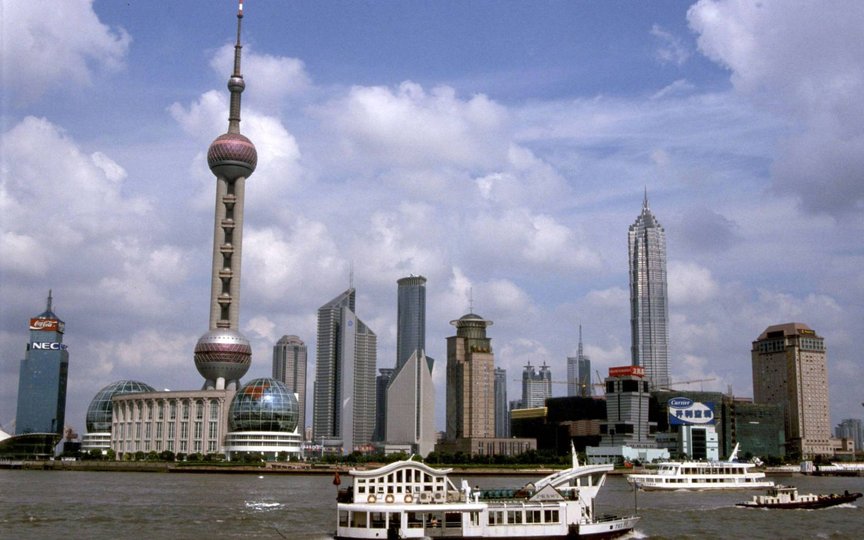
A key trend in commentaries on the latest APEC summit has been to focus on its novel features. It was the first APEC meeting held in Shenzhen or indeed any part of what Beijing has taken to calling the ‘Greater Bay Area’, a megalopolis that also includes nearby mainland cities such as Guangzhou as well as the Special Administrative Regions of Hong Kong and Macao. There was no precedent for the leader of the Chinese Communist Party to go in person to meet an American president on the tarmac upon his arrival in China and for the two men involved to greet each other with a hug. Most notably of all, there had never been a trilateral discussion between the leaders of China, the United States and Russia. Still, amid these novelties, I was struck by words and actions associated with the 2026 Shenzhen event that were not unprecedented. And I am not thinking of the oft-mentioned parallels or at least partial parallels between the Xi Jinping, Donald Trump and Vladimir Putin discussions and photo op in Shenzhen and the Yalta discussions and photo op involving Roosevelt, Churchill and Stalin 81 years ago.
First, it was not novel for the Chinese Communist Party to plan an APEC summit with an eye towards showcasing China’s ‘ability to host glittering international events’ and hold it in a city touted as having a ‘high-tech skyline’ and other futuristic features. They did this back in 2001. The phrases in quotation marks come from ‘Dual goals for APEC summit’, a Christian Science Monitor report of October 19, 2001. The ‘high-tech skyline’ of a futuristic city back then was Pudong’s.
Second, it was also not novel for an APEC summit to take place in China at a moment of great geopolitical uncertainty related in part to a US–Middle East issue. Here, again, there was a Pudong precedent. The 2001 meeting was held just after 9/11, at a time when American military moves against Afghanistan were only beginning.
Third, going back one more time to an aspect of the APEC meeting held 25 years ago, this was not the first time Putin had one-to-one meetings on the sidelines of a meeting in China with an American president and a head of the Chinese Communist Party. In Pudong in 2001, he had a face-to-face conversation with George W. Bush at one point and Jiang Zemin at another.
Fourth, it was not a novelty, though it might have been just a year ago, that none of the analysts trying to predict before the latest APEC meeting what Trump would bring up when he met with Xi put ‘Beijing’s human rights record’ on their bingo card. It was once so routine for American presidents to bring up this topic when they met with the leader of the Chinese Communist Party that if this did not happen it would have seemed like something notable and needing explanation. The new normal is different. The best illustration of this is that not only did Trump evince no interest in human rights issues when Xi made his September state visit to Washington, but this did not surprise commentators reflecting on the event after it took place.
Finally, it was not a novelty that Xi’s comments at the trilateral meeting on the sidelines of the latest APEC summit included a reference to nuclear weapons being a ‘Sword of Damocles’ held over the head of humanity. Some reporters treated this part of Xi’s remarks as surprising, since he was expected to want to downplay the importance of his country, the United States and Russia all joining forces to scale back nuclear arsenals. China has been playing catch up to Russia and the United States, both of which have much bigger supplies of nuclear weapons, and hence its leader might feel it problematic for all to move toward reducing their stockpiles in tandem. For those who follow Xi’s speeches, though, it was not surprising either that he would bring an allusion to ancient Greece into his rhetoric or that he would treat nuclear weapons as an existential threat. He referred to the ‘Thucydides Trap’ when he met Trump in Beijing in May and, more significantly, he used the same phrase, calling nuclear weapons a ‘Sword of Damocles’, in a speech he gave in Geneva back in 2017.
The lack of attention to Beijing’s human rights record in Trump’s meeting with Xi in Shenzhen was deeply ironic in that time and place. Just weeks before the APEC summit began in one part of the Greater Bay Area, deeply disturbing news related to human rights came out of two other parts of the region. In Hong Kong, a court sentenced Joshua Wong, who has been in jail since late in 2020, to serve an additional ten years behind bars. In Macao, a court gave an even longer sentence to Au Kam San, a veteran pro-democracy former legislator who had never gained the same degree of global fame.
The charges levelled at both these figures, as well as various other prisoners of conscience in the two Special Administrative Regions, involve engaging in non-violent political activities of a sort that as recently as the 2010s were legal in the cities they lived in, despite already being outlawed in mainland urban centres such as Shenzhen. One theme in the media coverage of the Shenzhen summit in the Chinese official press was how wonderful it is that the cities of the Greater Bay Area have become so much more tightly entwined in recent years. They are now part of a single impressive whole yet retain distinctive special features, the official line holds, with a case in point being that APEC ministerial meetings were held on tourism in Macao in June and on finance in Hong Kong in October, before the leaders’ meeting in Shenzhen, with technology its focus. It is distressing to those of us concerned with human rights issues that there was no room in the meeting in Shenzhen, and little room even in the international coverage of it, for the dark side of this process of regional integration symbolised by Joshua Wong and Au Kam San. And there was little or no room for any discussion of various other men, such as Jimmy Lai, as well as courageous women such as journalist Gwyneth Ho and crusading lawyer Chow Hang-tung, who are also serving time short train rides away from the futuristic city that just hosted its first APEC summit.
While I find much to criticise about Beijing’s recent human rights record relating to not just Hong Kong and Macao but even more so Tibet and Xinjiang, I fully support one view of my discipline that Xi expressed again during the recent APEC summit, when he told business leaders in Shenzhen what ‘history tells us’. ‘History,’ he has said, ‘is the best textbook.’ Xi clearly likes that line a lot. Its echo in Shenzhen was no novelty, as he has brought it into a lot of his previous speeches over the years.


