Inside the Wolf’s Lair
- November 16, 2026
- Samuel Rubinstein
Felix Bohr’s account of Hitler’s years in the Wolf’s Lair is at its strongest when the author resists the pull of present-day politics to reveal the past as it actually was.
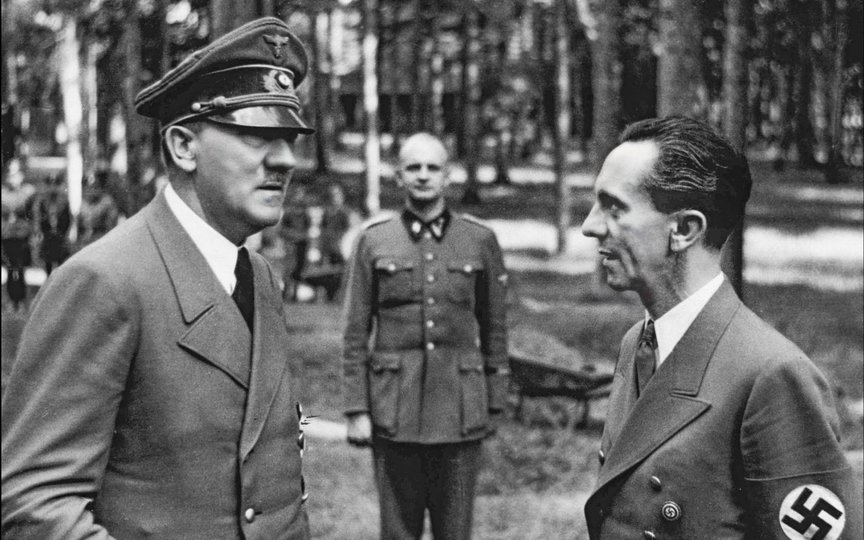
Before the Downfall: Hitler’s Years in the Wolf’s Lair, Felix Bohr, translated by Jessica Spengler, Polity Books, £25
Go to the modern history section of any bookshop in Germany and you will find lots of books by Anglophone authors. Richard Evans, Ian Kershaw, Christopher Clark: they are all bigger celebrities in Germany than in their home countries, and bigger over there than their German counterparts. Why is this the case? It is not as if Germany has no historians to boast of. Anyone who writes about German history will feel an immense debt of gratitude to all who have toiled away at their Habilitationsschriften and given themselves over to long-term collaborative projects, all handsomely resourced by a state that values scholarship highly. And yet, the closer one gets to the years 1933-1945, and the greater the need for an engaging and readable synthesis, the less the German historian seems able to offer. The non-German has to step in.
What explains this curious phenomenon is, I think, that modern German history is too much of a minefield for German historians writing for a popular audience. There is simply too much national neurosis, too much twitching about. Only a non-German could be allowed to argue that Germany’s responsibility for the Second World War should not be back-projected to the First: Christopher Clark was criticised over The Sleepwalkers, but never knocked off his perch as a kind of adoptive national treasure. Similarly, it would be unthinkable for a German author to begin his biography of Hitler with a joke; but, referring to the original surname of Hitler’s father, Kershaw began his with the remark that ‘Heil Schicklgruber would have sounded an unlikely salutation to a national hero’.
German books about the Nazis tend to involve much wrestling with grand moral questions about the nature of evil and the strain of historical guilt. The non-German historian can skip the throat-clearing and slash through the hazardous jungle. Free from the pressures of Vergangenheitsbewältigung (coming to terms with the past), he or she can tell it wie es eigentlich gewesen (as it actually was).
Before the Downfall, about Hitler’s time directing his world war from the Wolf’s Lair in what is now the northeast of Poland, is at its best when telling us how it actually was. What, asks the journalist and historian Felix Bohr (in a brisk English translation by Jessica Spengler), was it like to be in the Wolf’s Lair? Even at the best of times, the environment was oppressive and gloomy. Hitler, Goebbels wrote, ‘doesn’t get out into the fresh air’; he ‘sits in his bunker, fusses and broods. If one could only transfer him to other surroundings!’ A chill atmosphere prevails, literally: in the freezing winters Hitler insisted on heating his rooms no higher than 11 degrees Celsius. The trickle of bad news from the Eastern Front was accompanied by more trivial irritations. Mosquitoes were so numerous that one building bore the nickname Mückenheim, ‘Mosquitoville’. On one occasion, Hitler kept trying to swat a mosquito that was bothering him, causing one of his adjutants to laugh. Hitler had him sent to the front line.
The image of Hitler conveyed throughout is that of a moody teenager. He wakes up late, throws tantrums, and gets high on drugs. When he is especially angry with himself and with the world, he blasts music from his room. He has a real temper, and practically anything can set it off. One day in the Wolf’s Lair, he read a report in the Berliner Morgenpost saying that the German Society for Mammalogy was junking the term Fledermaus: for (in the German spirit of scientific precision) the bat is not a type of mouse. The Führer was furious. ‘If the members of the Society for Mammalogy have nothing smarter or more important to the war effort to do, then perhaps they could be put to use for an extended period in construction battalions on the Russian front.’ The Society for Mammalogy relented, and the Fledermaus remains.
The supporting cast of Before the Downfall includes the fat physician Theo Morell, whose duty it was to amp Hitler up with testosterone prior to his liaisons with Eva Braun; Hermann Göring, who spends most of his time at the Wolf’s Lair guzzling caviar and quaffing champagne; a whole typing pool of secretaries; hard-boiled Wehrmacht generals fighting one another like rats in a sack; and even Benito Mussolini, who is flown to the Wolf’s Lair after his Italian ouster.
Most arresting are the historians Percy Ernst Schramm and Felix Hartlaub, who were commissioned to keep the war diary. Neither was much of a committed Nazi. Hartlaub’s own father was surprised that his son should be trusted at the very heart of the Third Reich, given his ‘anti-militaristic, anti-National Socialist attitude’. Even in his appearance Hartlaub was out of place: he once joked that it was ‘breathtakingly audacious’ of him to ‘want to get ahead in Germany with this nose’. He died at the end of the war; Schramm survived, and defied the general destruction order, keeping important records intact.
In all this, Before the Downfall is illuminating and engrossing. But here and there the German neuroses creep in. This is most apparent in the treatment of the most famous event at the Wolf’s Lair, the plot on Hitler’s life on 20 July 1944. The wie es eigentlich gewesen is handled well: there is a detailed narrative of how Count Stauffenberg got up close to the Führer, and how the ensuing, explosive events transpired. What is lost, however, is any sense of who Stauffenberg was, and why he was motivated to act as he did. He is treated as a generic figure of ‘resistance’, a hero whose posthumous quest for recognition is tenderly related at the end of the book. There, too, there is a throwaway reference to ‘efforts by far-right politicians to hijack the memory of Stauffenberg’s failed assassination attempt’, seeking to ‘instrumentalize the attack for their own purposes’.
But is this a ‘hijacking’? It would not be unreasonable to describe Stauffenberg as ‘far right’. His thought was embedded in the ‘conservative revolution’ of the Weimar era: his politics were aristocratic, anti-liberal, and anti-democratic. He never shed the commitments and prejudices of the circle around the poet Stefan George, into which he was initiated as a teenager. He was the product of a strange, esoteric subculture, as alien to us as the Nazis themselves. He did not resist Hitler for the reasons we might assume or understand — or wish that he had. And so he is much more interesting than this book makes him out to be.
Likewise, Before the Downfall carries a heavy trace of sympathy for Poland’s recent demands to Germany for war reparations. Bohr writes with palpable dismay that his own country ‘has not responded to these demands and considers the reparations issue to be closed’; this is implied to be, among other things, a symptom of its ‘persistent misunderstanding and ignorance of its eastern neighbours’.
There is, however, another conspicuous absence in this book: that the Red Army which pressed westwards, ultimately causing Hitler and his coterie to leave the Wolf’s Lair behind, also ethnically cleansed the surrounding region of its Germans. This is a delicate matter in Germany, and one can easily see why. But it surely merits mention in any discussion of this subject, if only to raise the possibility that the requested reparations have, in effect, already been paid.
This book is a treasure-trove of interesting information and skilful narration. Its overriding effect is, however, to show how anxiety about present responsibilities can make it much harder to handle historical complexities. There are difficulties and awkwardnesses in modern German history, which non-German historians, by and large, find it easier to stare in the face.
Samuel Rubinstein
More from Europe

Johann Peter Hebel’s little treasure chest

Putin loses his Balkan Trojan horse

The consumer-voter is killing German politics

Moscow is watching Latvia. Is Washington?

Britain and Germany: Europe’s original special relationship
More from Germany

Thomas Mann’s hideous homecoming
The consumer-voter is killing German politics
Britain and Germany: Europe’s original special relationship

Germany’s flyover country takes its revenge


